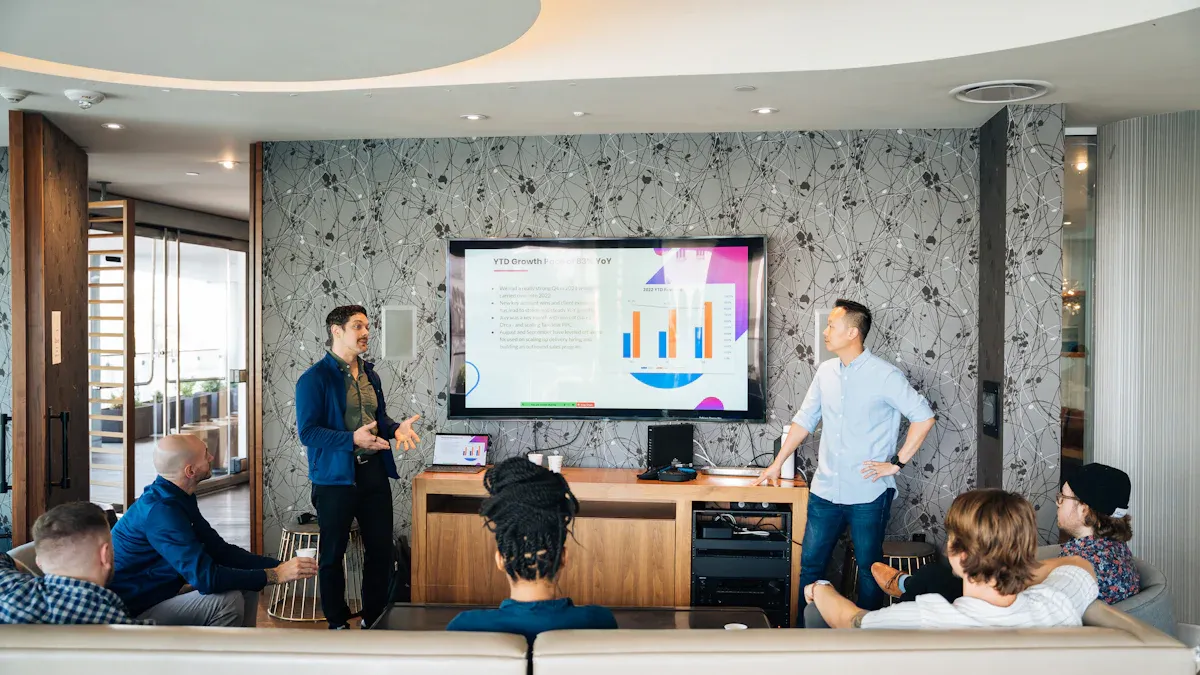
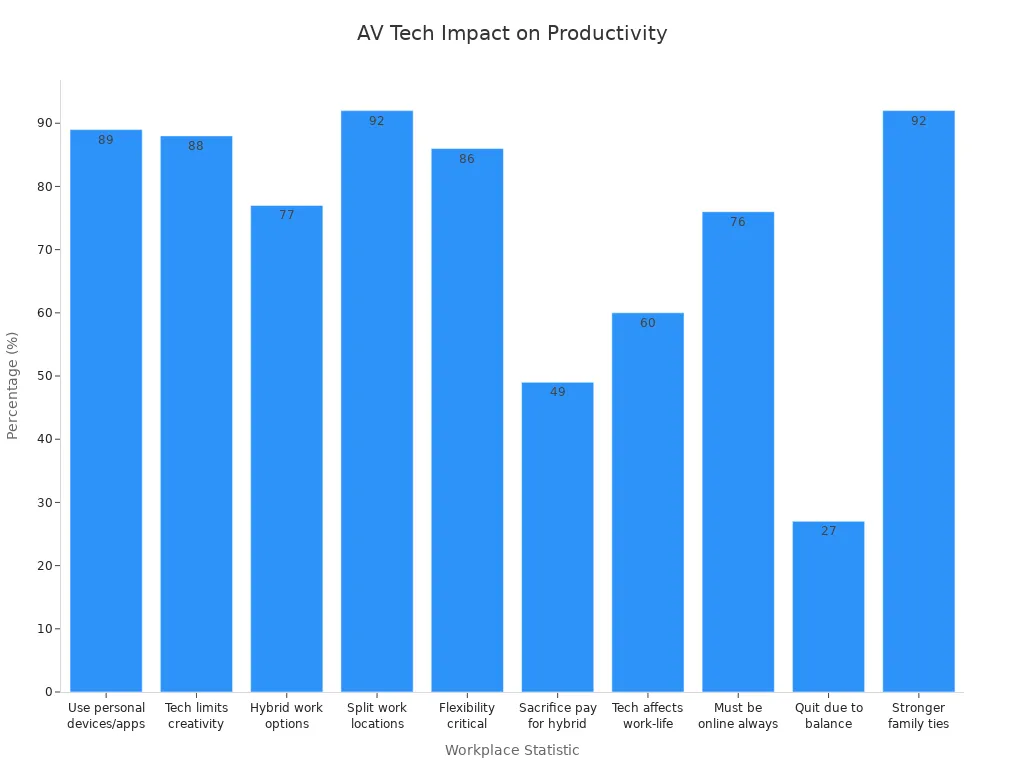
AV technology, also known as A/V, stands for audio video or audio visual. The abbreviation AV stands for audio visual, combining both sound and images to help you understand information more clearly. An A/V system uses AV audio and video tools, including various AV audio visual equipment, to connect people and ideas. AV technology allows you to create, display, and share AV content in many settings, such as schools, offices, or events. In the workplace, AV audio video solutions make meetings more effective and help teams communicate easily. With AV audio visual production, you can produce and share AV content from anywhere. AV audio and video tools ensure you see and hear every detail, making your message more powerful.
More than 70% of organizations use AV technology. It supports hybrid work and helps teams collaborate more effectively.
Key Takeaways
AV technology uses sound and pictures to help people talk and understand better. Modern AV systems help people work together. They make meetings more fun and useful. If you upgrade your AV setup, you can save time and energy. This helps everyone work better. AV integration links audio and visual devices. This makes talking and showing things easy. AV technology in schools and businesses helps people learn and share ideas. It makes learning and sharing more fun and interesting.
Unraveling the Evolution of Audiovisual Technology
You notice audio visual technology every day. You see it when you watch movies. You use it during video calls. You hear it when you listen to music. Audio visual systems started with simple ideas. Now, they change how you see and hear things. Let’s find out how av has changed and why it matters.
Audio visual technology began with inventions like the phonograph. The phonograph let people record and play sound for the first time. Later, motion picture technology showed moving images to people.
Thomas Edison made the phonograph. It let people record and play sound.
Late 19th Century
Motion picture technology started. It helped create movies.
Mid-20th Century
Television was introduced. It changed how people watched shows.
Late 20th Century
The digital revolution began. It made audio visual technology better.
21st Century
Streaming services became popular. They changed how you get audio and visual content.
Today, av systems are smarter and stronger. New hardware and software help them improve. Check the table below to see how audio visual technology has changed in the last ten years:
Hardware Advancements
Software Advancements
Advanced sensors are now used.
AI algorithms help make systems smarter.
Cameras, radar, and LiDAR units are common.
Software solutions are now more important.
Processors are faster and smarter.
Safety and features are better than before.
Teams work together from different fields.
The goal is fully autonomous systems.
You get benefits from these changes every day. Audio visual equipment uses less energy now. It has adaptive brightness and eco-modes to save power. Many av devices use recyclable materials and parts you can change. This helps protect the planet.
Audio visual technology also helps people with disabilities. AV systems have features for wheelchair access and better movement. These changes make audio and visual experiences open to everyone.
Audio visual technology keeps getting better. It makes your life easier, more connected, and fair for all.
How AV Technology is Transforming the Workplace
Unlocking the Power of Modern AV Systems
Audio visual technology is changing how people work. Modern av systems help you talk to your team. You can use them in the office or at home. Tools like high-fidelity microphones and interactive touchscreens make meetings fun. You can share ideas right away. You can work on projects together, even if your team is far away.
Companies using advanced audio visual technology see more employee engagement. You feel part of meetings. Leaders can talk to everyone easily. This helps build a strong team. The table below shows how different audio visual tools help you stay focused and connected:
Let you draw, write, and share ideas fast with your team.
Cloud-based AV solutions
Let you join meetings from anywhere, so distance does not matter.
You also get smart features like auto-tracking cameras and digital signage. These tools keep you updated. They help everyone feel included in talks.
AV systems help everyone join meetings, in the office or at home. Good audio and visual tools help you talk better and make good choices.
The Key to Elevating Your AV Experience
To get the best from your audio visual system, pick the right tools. Work with an av consultant for help. Modern audio visual technology has voice integration and AI-driven automation. You can use your voice to control your equipment. This makes your workday easier.
Here are some ways audio visual technology helps you work better:
Interactivity lets you join meetings and share ideas with one touch.
Voice integration lets you control devices without using your hands.
Hybrid event technologies support both in-person and online meetings.
AI-driven automation controls lights and temperature for comfort and saves energy.
Upgrading your av system gives you real benefits. You save time with easy control. You spend less money by using energy-saving equipment. If you have trouble picking or setting up your system, an av consultant can help. They match your needs with the best audio visual solutions.
Audio visual technology makes your workplace smarter and more flexible. You get better communication, more work done, and a nicer place to work.
Exploring the Versatility of AV Technology in Business
The Remarkable Journey of Audiovisual Communication
Audio visual technology helps businesses every day. It lets you talk to your team and customers. These systems make talking easy and interesting. You use them for meetings, training, and ads. Small companies pick av solutions to help people talk and meet. Businesses use av at trade shows and in offices to get people interested. Many companies install av to help with hybrid work.
Audio visual communication helps you share ideas at work.
Virtual reality lets customers see products in new ways.
Personalized content makes customers feel special.
Audio visual technology changes how you share your story. You can track your marketing results and change your plan.
The Role of AV Integration in the Modern Workplace
AV integration joins audio, visual, and control systems. You get a smooth experience with microphones, speakers, and displays. This setup helps you run meetings and share things right away. In hybrid work, av installation lets everyone join meetings from anywhere.
Business Function
Benefit Description
Training
Makes training clear and interactive. People can ask questions and join in.
Conferencing
Helps people talk and work together in meetings.
Marketing
Uses AV tools to make presentations fun and easy to understand.
AV integration helps you get more work done. You can work with teams far away. Video calls let everyone join and share ideas. Good audio visual systems help you finish projects faster.
Understanding the Crucial Influence on Your AV System Performance
Your audio visual system works well if you use good parts. You need microphones, amplifiers, and speakers for clear sound. Displays and projectors help people see your content. Control systems make it easy to use everything. Networking connects all your devices and makes av installation work well.
Component Type
Description
Microphones
Pick up sound; where you put them matters.
Speakers
Play sound; where you put them matters too.
Amplifiers
Make sound louder; needed for big rooms.
Video Displays
Show pictures; good quality helps people see better.
Lighting
Changes video quality; good lighting stops shadows.
Control Systems
Help you use AV parts; make things simple.
Networking
Connects devices; helps everything work together.
When you set up av, think about these parts. Good audio and visual tools help your system work well. You get clear sound, sharp pictures, and easy control. This helps your business talk, train, and sell better.
You use av technology every day. It helps you talk, have fun, and work with others. AV systems mix sound and pictures. They use things like microphones, cameras, and special software. These tools help you share ideas and connect with people. The table below explains why av is important:
Component
Description
AV Technology
Systems and equipment used to create, process, and distribute audio and visual content.
Components
Includes cameras, microphones, software for editing, and hardware for display.
Importance
Enhances communication and engagement across various sectors like entertainment, education, and business.
AV systems help you pay attention and remember things. You hear sounds clearly and see bright pictures. You can also join in and take part.
You use digital audio tools at home and at work.
AV technology lets you work and learn in new ways.
Audio tools make meetings and events better.
Schools and businesses use these systems for lessons and talks.
AV helps you reach people no matter where they are.
AV technology will keep getting better with new AI audio tools, hybrid work, and cool experiences. You will also see more earth-friendly choices soon.
FAQ
What does AV stand for?
AV stands for audio visual. You use this term when talking about technology that combines sound and images. AV systems help you see and hear information at the same time.
How does AV technology help in schools?
You use AV technology in classrooms to make lessons more interesting. Projectors, speakers, and interactive boards help you learn better. Teachers use AV tools to show videos and play sounds.
What equipment do you find in a typical AV system?
You often see microphones, speakers, cameras, projectors, and screens in AV systems. Control panels help you manage these devices. Software connects everything and makes sharing easy.
Can AV technology improve remote work?
Yes! AV technology lets you join meetings from anywhere. You see your team on video calls and hear them clearly. Good AV tools help you work together, even if you are not in the same room.
Why is AV integration important for businesses?
AV integration connects all your audio and visual devices. You get smooth meetings and clear presentations. This setup helps your team share ideas and work faster.
Click the button to contact us for more information