Audio visual communication, also known as audio visual communications or audio and visual communication, means you use both sound and visuals to share ideas. You rely on voices, images, and gestures to understand people better. Studies show you often combine what you hear and see to follow conversations. When you miss visual cues, you work harder to understand others. You depend on audio and visual communication every day, whether chatting with friends or watching videos. This approach helps you catch details quickly and makes messages clearer. Audio visual m is an essential part of how we interact and process information.
People use audio visual communication, or audio visual communications, in daily life for clarity and ease.
Visual cues in audio and visual communication help you follow conversations and reduce confusion.
Key Takeaways
Audio visual means of communication to enhance understanding and retention of information.
Using both audio and visual elements together makes messages clearer and helps you remember details better.
Incorporating visuals in learning environments increases student engagement and improves test scores.
Real-time audio visual interactions, like video calls, foster connections and make communication more effective.
Staying updated with audio visual trends can enhance your communication skills and keep your audience engaged.
Visuals: These are things you see, like pictures, text, graphics, or animations. Visuals make ideas clearer and help you remember information.
Integration: When you combine sound and visuals, you create a stronger message. Both work together to help you understand and remember what you see and hear.
Communication is a process where you create and interpret messages that get a response. Experts say it is both about sending information and building connections.
Communication helps you share ideas and understand others.
When you use audio and visual elements together, you get the best results. Audio visual communication combines sound, images, graphics, animation, and even interactivity. This mix makes your messages clearer and easier to remember.
If you have too many visuals or sounds, it gets harder to understand. Using both together in balance works best.
Studies show that audio visual communications help you process messages faster and more accurately. For example, drivers who get both audio and visual traffic messages react sooner and make better decisions. In classrooms, students who get feedback with both sound and visuals understand lessons better and improve their work.
Study Title
Findings
Audiovisual presentation of variable message signs improves message processing in distracted drivers during partially automated driving
Drivers who hear and see messages respond faster and understand better.
The power of multimodality: Improving speech act classification through visual cues, audio intonation, and gaze tracking
Visual cues and audio intonation together help you understand speech, even in noisy places.
The effect of audio-visual feedback on writing components and writing performance of medical university students in two different instructional modes
Audio visual m helps you learn, remember, and act. When you use both sound and visuals, you make your messages stronger and easier to understand.
How audio and visual communication works
Sharing information
You share information every day using audio and visual communication. This process uses both sound and visuals to help you understand messages better. When you watch a movie, join a video call, or see a classroom presentation, you use your ears and eyes together. Electronic devices like computers, tablets, and smartphones make this possible. They combine voices, images, and graphics to create clear messages.
You combine sound and visuals to make messages clear and engaging.
Video Conferencing
You connect with others in real time, even if they are far away.
Digital Signage
You see dynamic content on screens in public places, which helps you get information quickly.
Educational Transformation
You learn in interactive classrooms that use audio visual communications for better understanding.
In schools, you use audio visual m tools like videos, interactive whiteboards, and animations. These tools make hard topics easier to understand. You interact with lessons and learn by doing, not just by listening.
Visuals and sounds break down tough ideas so you can learn faster.
Interactive tools let you join in and ask questions, making learning fun.
Real-time interaction
Real-time interaction means you communicate instantly with others using audio and visual communication. You see and hear people at the same time, which helps you feel connected. Video calls, online classes, and live presentations use this method.
At Grand Canyon University, students pay more attention and join in more when teachers use AV technology.
Classrooms with audio visual communications help students score higher on tests and remember lessons longer.
Interactive displays let you see and touch information, making learning active and exciting.
Studies show that students in AV-enhanced classrooms do better. They score 30% higher on tests than students in regular classrooms. Classes with audio visual m tools keep students interested and help them stay in school.
AV technology lets you learn at your own pace.
You get lessons that fit your needs, which helps you do your best.
You experience audio visual communication every day, often without even noticing. When you scroll through social media, you see videos, listen to music, and watch stories that combine sound and images. Most Americans listen to audio daily, even more than those who browse the Internet or use apps. You probably watch TV, stream videos, or check out short clips on platforms like TikTok and Instagram. These activities use both sound and visuals to grab your attention and help you remember what you see.
Audio use peaks during the day when you make important choices.
Social media posts with videos get much more engagement than those with just photos. You are more likely to buy something after watching a video about it. Companies know this and use videos to inform, motivate, and persuade you.
Statistic
Description
144%
You are more likely to purchase a product after watching a video.
Companies gained new customers after sharing videos on social media.
49%
Video posts on Instagram receive more engagement than photo posts.
Video content now leads on social media, with short clips and reels drawing the most attention.
Business and learning
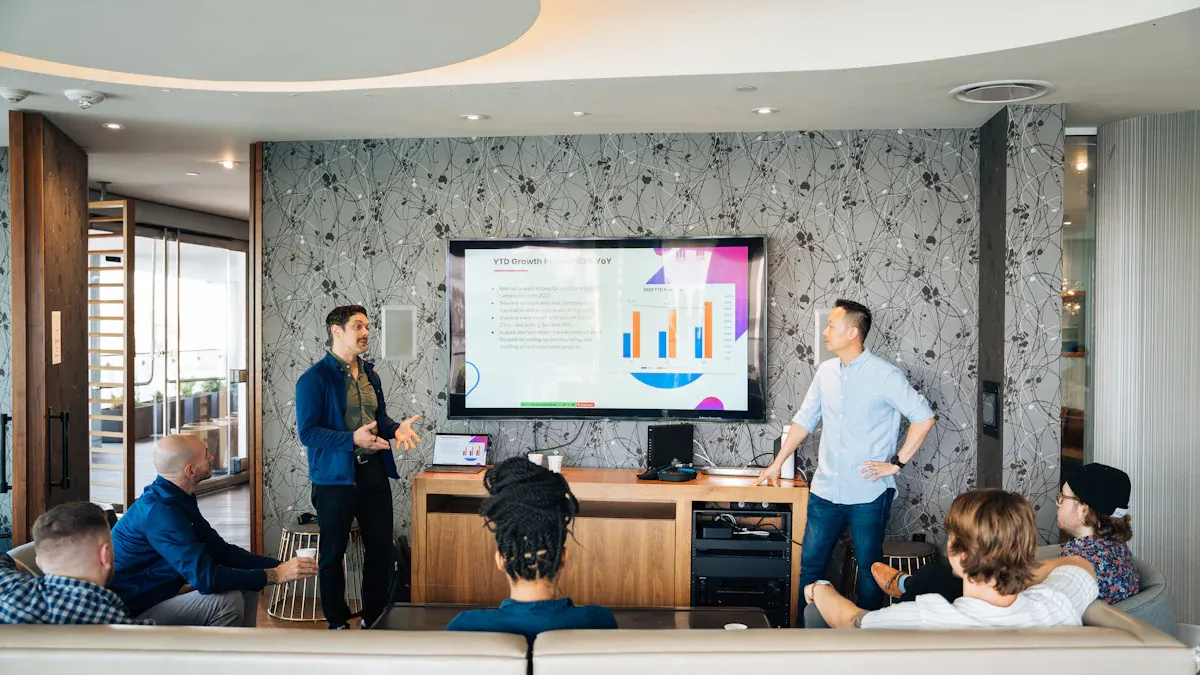
In the workplace, audio visual communications help you connect with others, whether you work in the office or from home. You join video calls, attend online meetings, and watch presentations that use both sound and visuals. These tools make teamwork easier and help you share ideas clearly.
Interactive presentations and digital whiteboards boost creativity.
Training sessions with videos and graphics help you learn faster.
Immersive meeting rooms with good sound and lighting keep you focused.
In schools, audio and visual communication makes learning more interactive. Teachers use videos, animations, and even virtual reality to explain tough topics. Research shows that these tools help you understand lessons better and make learning more fun.
Study Title
Key Findings
The innovation path of VR technology integration into music classroom teaching in colleges and universities
Immersive technology increases interactivity and realism, making lessons more engaging.
Effects of Multimedia Audio and Video Integrated Orientation Training on Employees’ Organizational Identification and Self-Efficacy
Multimedia learning with text and images improves understanding and is now common in classrooms.
Innovative application of new media in visual communication design and resistance to innovation
New media tools improve communication and learning outcomes for both teachers and students.
You see audio visual m everywhere, from classrooms to boardrooms. These tools help you learn, stay motivated, and work better with others.
Importance of audio visual communications
Benefits
You experience many benefits when you use audio visual communication in your daily life, at school, or at work. You can share ideas quickly and clearly. You save time because you do not need long explanations. You work better with others, even if your team is far away. You learn more easily when you see and hear information at the same time.
You enjoy learning with videos, animations, and interactive graphics.
You join dynamic lessons with interactive whiteboards.
You also face challenges. Poor audio quality can make it hard to understand others. Unstable connections can interrupt calls and cause you to miss important details. The location and equipment of interpreters can affect the quality of remote communication.
Impact
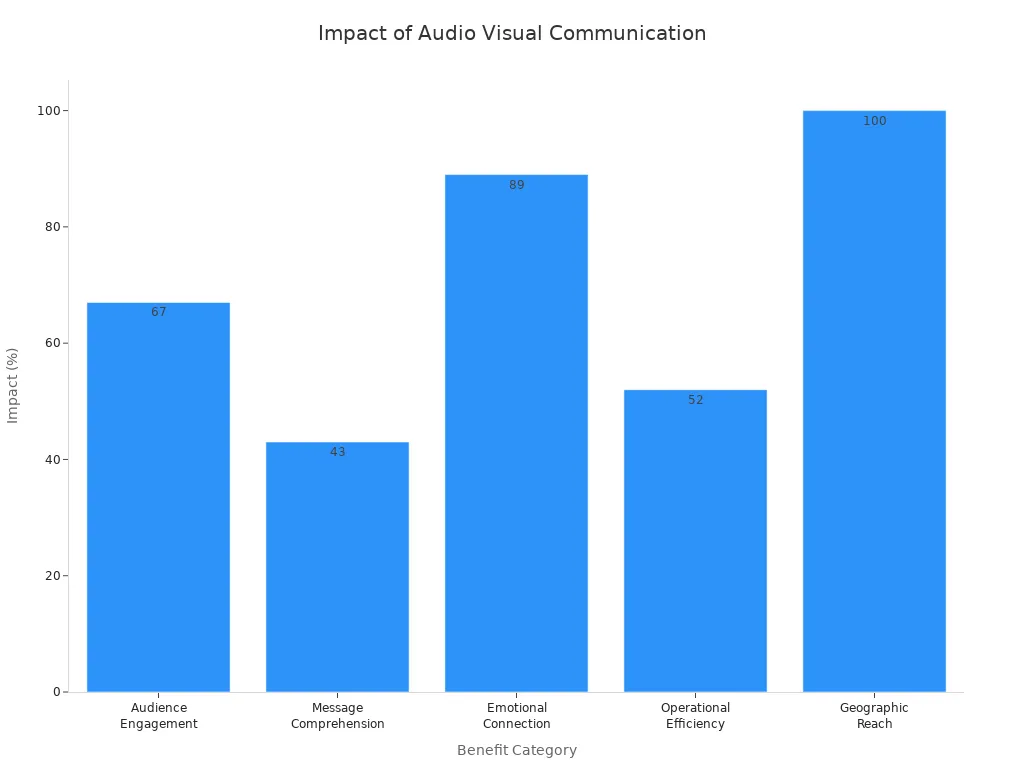
Audio visual communications shape how you receive and process information. You pay more attention and remember more when you see and hear messages together. You connect with stories and brands on a deeper level. You join meetings that finish faster and reach people anywhere in the world.
Raises awareness, influences attitudes and intentions
Hope Appeals
Arouses hopes and expectations
Motivates behavior, can be more effective than fear
You process information better when you see data and hear explanations together. You remember more because you feel emotionally connected. Your culture also shapes how you understand emotions. For example, people in Eastern cultures focus on the eyes, while people in Western cultures look at the mouth. In Singapore, you recognize emotions more easily in faces that look familiar to you.
Audio visual m helps you learn, work, and connect with others. You use it to share ideas, solve problems, and build relationships every day.
Key features of audio visual m
Main characteristics
You see audio visual m changing quickly as technology grows. You notice new features in audio visual communication every year. These features help you share ideas and connect with others in smarter ways.
Augmented Reality (AR) lets you interact with digital objects in real life. You use AR in stores to try on clothes or in classrooms to explore science.
Collaborative meeting spaces give you tools to work with others, even if you are far away. You share screens, chat, and solve problems together.
Spatial audio makes sounds feel real. You hear voices and music as if they come from different directions, making movies and games more exciting.
You experience these features in your daily life, from video calls to virtual lessons. Technology helps you learn, work, and play in new ways.
You also see new trends shaping audio visual communications. AI helps you manage content and predict problems before they happen. Companies use eco-friendly materials to build AV walls that last longer and save energy. 3D and holographic displays create lifelike images for entertainment and shopping. Cloud-based platforms let you join meetings and share ideas with teams around the world.
Effective communication
You measure the success of audio and visual communication by looking at several key criteria. These help you know if your message is clear and easy to understand.
Criteria
Description
Audio Quality
You check if the sound is clear and loud enough.
Video Quality
You look for sharp images and bright colors.
Latency
You want sound and video to match without delay.
Integration and Compatibility
You need all parts to work together smoothly.
System Responsiveness
You expect fast and accurate controls.
Reliability
You want the system to work without stopping.
Evolving media components make your messages stronger. You grab attention by using both sight and sound. Visuals help you explain tough ideas, while audio repeats key points. Immersive experiences help you remember what you learn.
You see new developments coming soon. Digital signage will use smart devices to reach more people. AR will let you try products before you buy. Virtual events will mix online and in-person meetings. 8K displays will show super clear pictures. Voice-controlled systems will let you use your voice instead of a remote.
Audio visual communication means you use sound and visuals together to share ideas and connect with others. You can make your messages stronger by balancing audio and visual elements, keeping things clear, and aiming for emotional impact.
You see visual and audio visual communication everywhere. Notice how it helps you learn, feel, and remember. You have the power to create and enjoy meaningful connections every day.
Click the button to contact us for more information