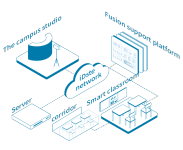
Video processing technologies are reshaping how you experience education, particularly in the context of smart campus lecture recordings. These tools make learning more interactive and accessible, especially on smart campuses. For instance, 84% of institutions report that video improves student satisfaction, while 68% aim to combine traditional teaching with virtual innovations. Studies also show that multimedia presentations enhance academic performance, particularly in procedural and evaluative knowledge. By leveraging these technologies, you can access engaging lecture recordings that adapt to your needs, making education more effective and inclusive. What video processing technologies are used in smart campus lecture recordings?
Key Takeaways
Video tools help learning by making lectures fun and easy to watch.
AI tools edit and shorten videos fast, making them better.
Live streaming lets students join classes from anywhere, anytime.
Cloud storage keeps lectures safe and easy to access anytime.
Adding captions and many languages helps all students feel included.
What Video Processing Technologies Are Used in Smart Campus Lecture Recordings?
AI-Based Video Editing
Automated scene detection and transitions
AI-based video editing tools simplify the process of creating polished lecture recordings. These tools automatically detect scene changes, ensuring smooth transitions between different segments of a lecture. For example, when a professor switches from a presentation slide to a whiteboard explanation, the system adjusts seamlessly. This automation saves time and ensures professional-quality videos without requiring advanced editing skills. Stephen Laster, CIO of Harvard Business School, highlights how such technologies transform traditional lectures into interactive experiences, making them more engaging for students.
Intelligent content summarization
AI algorithms can analyze lengthy lecture recordings and generate concise summaries. These summaries help you quickly review key points without watching the entire video. This feature is especially useful during exam preparation or when revisiting complex topics. A survey at Temple University revealed that 63% of students used lecture capture systems for exam preparation, while 54% used them to clarify concepts. Intelligent summarization ensures you focus on the most important content, enhancing your learning efficiency.
Real-Time Streaming and Encoding
Low-latency streaming for live lectures
Real-time streaming technologies enable you to attend live lectures from anywhere. Low-latency streaming ensures minimal delay, allowing you to interact with instructors and peers in real time. This feature is crucial for maintaining the immediacy and engagement of live classroom experiences, even in virtual settings.
Adaptive bitrate streaming for diverse devices
Adaptive bitrate streaming adjusts video quality based on your internet connection and device capabilities. Whether you're using a smartphone, tablet, or laptop, this technology ensures smooth playback without buffering. It also makes lecture recordings accessible to students with varying internet speeds, promoting inclusivity.
Video Compression Techniques
Efficient storage and bandwidth optimization
Video compression reduces file sizes, making it easier to store and share lecture recordings. Compressed videos consume less bandwidth, enabling faster uploads and downloads. This optimization minimizes buffering and ensures a seamless viewing experience. Additionally, it lowers storage costs for institutions, whether they use cloud-based or on-premise solutions.
Popular codecs used in lecture recordings
Modern lecture recordings often rely on codecs like H.264 and H.265 for compression. These codecs maintain high video quality while significantly reducing file sizes. This balance between quality and efficiency ensures that you can access clear and detailed lecture recordings without straining your device or internet connection.
By leveraging these video processing technologies, smart campuses create a more accessible and engaging learning environment. What Video Processing Technologies Are Used in Smart Campus Lecture Recordings? These tools not only enhance your educational experience but also make it more flexible and inclusive.
Cloud Storage and Distribution
Scalability and accessibility for students
Cloud storage plays a vital role in making lecture recordings accessible to students. It allows institutions to store large volumes of video content without worrying about physical storage limitations. You can access these recordings anytime, whether you're at home or on campus. This flexibility ensures that you never miss out on important lessons, even if you can't attend a live lecture.
Cloud platforms also scale effortlessly to accommodate growing student populations. As more students enroll, the system adjusts to handle increased demand without compromising performance. For example, universities using cloud-based solutions can provide uninterrupted access to lecture recordings during peak exam seasons.
Tip: When choosing a cloud storage provider, institutions often prioritize platforms with robust security features to protect student data.
Integration with Learning Management Systems (LMS)
Cloud storage integrates seamlessly with Learning Management Systems (LMS), creating a centralized hub for all your educational resources. Lecture recordings stored in the cloud can be linked directly to LMS platforms, making it easy for you to find and access them alongside other course materials.
This integration streamlines your learning experience. Instead of juggling multiple platforms, you can log into your LMS and find everything you need in one place. Many LMS platforms also support features like video bookmarking and progress tracking, helping you stay organized and focused on your studies.
Institutions often use this setup to enhance collaboration. For instance, professors can upload lecture recordings to the LMS and enable discussion forums where you can ask questions or share insights with classmates.
By combining cloud storage with LMS integration, smart campuses create a cohesive and efficient learning environment. These technologies answer the question, "What Video Processing Technologies Are Used in Smart Campus Lecture Recordings?" by demonstrating how advanced tools improve accessibility and engagement for students.
Benefits of Video Processing Technologies in Education
Enhanced Learning Experiences
Interactive and engaging video content
Video processing technologies create interactive and engaging lecture recordings that capture your attention. Features like animations, annotations, and embedded quizzes make learning more dynamic. Studies show that students who engage with multimedia presentations report higher satisfaction and improved academic performance.
Surveys indicated that students gained improved metacognitive knowledge after engaging with video content.
Student Satisfaction
Increased engagement and satisfaction were reported by students who participated in multimedia presentations.
Interactive videos also encourage active participation. For example, guiding questions during video playback help you focus on key concepts. This approach has been linked to better test scores and higher engagement levels.
Outcome Type
Description
Test Scores
Students who answered guiding questions while watching videos scored significantly higher on subsequent tests.
Student Engagement
The use of guiding questions during video viewing led to higher engagement and better learning outcomes.
On-demand access for flexible learning
On-demand access to lecture recordings allows you to learn at your own pace. Whether you need to revisit a complex topic or catch up on missed classes, these recordings provide flexibility. This feature supports diverse learning styles and ensures you can tailor your study schedule to fit your needs.
Improved Accessibility
Closed captions and multilingual support
Closed captions make lecture recordings accessible to students with hearing impairments. Multilingual support ensures that language barriers do not hinder your learning. These features promote inclusivity and help you understand the material more effectively.
Support for students with disabilities
Video processing technologies also cater to students with visual or cognitive disabilities. Tools like screen readers and simplified interfaces enhance usability, ensuring everyone can benefit from recorded lectures.
Operational Efficiency
Streamlined lecture recording and editing
Automation in video processing reduces the time and effort required to record and edit lectures. AI tools handle tasks like scene transitions and content summarization, allowing educators to focus on teaching. This efficiency benefits both you and your instructors.
Cost savings through automation
Institutions save money by automating lecture recording and editing processes. Reports highlight long-term savings from reduced labor costs and optimized resource allocation. These savings allow schools to invest in other areas, improving your overall learning experience.
Video processing technologies not only enhance your learning but also make education more inclusive and efficient. These tools are transforming how you access and engage with educational content.
Real-World Applications of Video Processing in Smart Campuses
Universities Leveraging AI for Lecture Recordings
Many universities now use AI to enhance lecture recordings, making them more interactive and accessible. For example, Indiana University has equipped all 700 of its classrooms with lecture capture technology. This initiative reflects a broader trend toward "classroom capture," which focuses on active learning. AI tools in these systems automate tasks like scene detection, transcription, and content summarization. These features save time for educators and improve your learning experience by delivering polished, easy-to-follow videos.
The adoption of AI in lecture recordings has grown significantly. Between spring 2020 and fall 2020, universities reported a 100% increase in instructor participation and a 125% rise in student engagement. These numbers highlight how AI-driven tools are transforming education by making it more efficient and engaging for both teachers and students.
Cloud-Based Platforms for Smart Campus Video Management
Cloud-based platforms play a crucial role in managing video content on smart campuses. These platforms offer several advantages:
Scalability: They adapt to changing workloads, ensuring smooth performance even during peak times like exams.
Centralized Management: Cloud systems simplify updates and monitoring, making it easier for institutions to manage their video resources.
Unlimited Storage: They accommodate large datasets, allowing you to access lecture recordings and other materials without limitations.
Cloud platforms also support advanced video analytics. For instance, they use deep learning models to analyze videos for tasks like object detection and action recognition. This capability enhances the quality of educational content and provides valuable insights into student engagement.
Advantage
Description
Powerful Computational Capabilities
Executes complex video analytics for tasks like object detection and action recognition.
Scalability
Handles fluctuating workloads and processing demands.
Centralized Management
Simplifies deployment, updates, and monitoring.
Unlimited Storage
Stores large datasets for long-term analysis and accessibility.
Examples of Successful Implementations in Education
Research also supports these findings. A study involving over 500 first-year economics students showed that multimedia presentations significantly improved academic outcomes. Students who engaged with video content performed better on mid-term tests and demonstrated enhanced procedural and evaluative knowledge. Surveys further revealed improvements in metacognitive skills, showing the broader impact of video technologies on learning.
These examples highlight how video processing technologies are reshaping education. By leveraging these tools, universities create more engaging and effective learning environments for you and your peers.
Challenges and Considerations in Implementing Video Processing Technologies
Cost of Implementation
Hardware and software expenses
Implementing video processing technologies requires significant investment in hardware and software. You need to consider the type and placement of cameras, as these are critical hardware components. High-resolution cameras with optimal bitrate and frame rate demand robust supporting hardware. Additionally, software licensing costs can add up, especially when multiple licenses are needed to support video analytics. Networking infrastructure also plays a vital role. High bandwidth is essential for real-time data transmission, particularly when using multiple high-resolution cameras. These factors make the initial setup a costly endeavor for institutions.
Long-term maintenance costs
Beyond the initial investment, you must account for ongoing maintenance expenses. Hardware components like cameras and servers require regular updates and repairs. Software systems also need periodic upgrades to stay compatible with evolving technologies. Institutions often face challenges in budgeting for these recurring costs, which can strain financial resources over time.
Privacy and Security Concerns
Protecting student and faculty data
Video processing technologies collect and store large amounts of data, including lecture recordings and user interactions. Protecting this data is crucial to maintaining trust. You must ensure that systems have robust encryption and access controls to prevent unauthorized access. Cybersecurity threats, such as hacking or data breaches, pose significant risks to sensitive information.
Compliance with data protection regulations
Educational institutions must comply with data protection laws like GDPR or FERPA. These regulations mandate strict guidelines for handling personal data. You need to ensure that video processing systems meet these legal requirements. Non-compliance can result in hefty fines and damage to an institution's reputation.
Tip: Regular audits and updates to security protocols can help institutions stay compliant and safeguard data effectively.
Technical Expertise and Training
Need for skilled personnel
Deploying and managing video processing technologies requires skilled professionals. You need experts who understand hardware configurations, software systems, and network infrastructure. Finding and retaining such talent can be challenging, especially for smaller institutions with limited budgets.
Training educators to use new tools
Educators play a key role in using these technologies effectively. However, many may lack the technical skills needed to operate advanced systems. Providing training sessions helps bridge this gap. You can empower educators to use tools like AI-based editing or cloud platforms confidently. This ensures that the technology enhances learning outcomes rather than becoming a barrier.
Investing in training programs not only improves efficiency but also boosts educators' confidence in adopting new technologies.
Future Trends in Video Processing for Education
AI-Driven Personalization in Lecture Videos
AI is transforming how you learn by personalizing lecture videos to meet your unique needs. These systems analyze your viewing habits, preferences, and performance to deliver tailored content. For example, if you struggle with a specific topic, AI can highlight relevant sections or suggest additional resources. This approach ensures that you focus on areas where you need the most help.
Personalized videos also adapt to your learning pace. AI can adjust playback speed, recommend pauses for reflection, or even insert quizzes to test your understanding. These features make learning more interactive and effective. By tailoring content to your needs, AI-driven personalization enhances your engagement and helps you retain information better.
Virtual Reality (VR) and Augmented Reality (AR) Integration
VR and AR are revolutionizing lecture recordings by creating immersive learning experiences. Imagine attending a virtual lecture where you can explore a 3D model of the human brain or walk through historical landmarks. These technologies make complex concepts easier to understand by allowing you to interact with them directly.
Lecture Capture Systems now support VR and AR integration, enabling instructors to record and share these immersive experiences. This innovation enhances accessibility, letting you revisit these lessons anytime and anywhere. Research highlights the importance of empirical data in advancing VR and AR in education. Studies grounded in literature provide valuable insights into how these tools improve learning outcomes. As these technologies evolve, they promise to make education more engaging and inclusive.
Advanced Analytics for Student Engagement
Advanced analytics help educators understand how you interact with lecture videos. By analyzing data like viewing patterns and quiz results, these tools identify what keeps you engaged. For instance, shorter videos under six minutes maintain your attention better than longer ones. Interactive elements like questions during playback also improve test performance and reduce distractions.
Study
Findings
Risko et al. (2012)
Increased mind wandering and decreased retention in longer videos.
Mayer (2008)
Conversational style enhances engagement and learning.
Guo et al. (2014)
Engagement drops significantly as video length increases; optimal length is under 6 minutes.
Szpunar et al. (2013)
Interpolated questions improve test performance and reduce mind wandering.
Zhang et al. (2006)
Interactive video leads to better learning outcomes and satisfaction.
These insights help educators design videos that keep you focused and improve your learning experience. Advanced analytics ensure that lecture recordings are not just informative but also captivating.
5G and Its Impact on Real-Time Video Streaming
The arrival of 5G technology is transforming real-time video streaming. With its high-speed connectivity and low latency, 5G ensures a seamless experience for live lecture recordings on smart campuses. You can now enjoy uninterrupted streaming, even in high-definition formats, without delays or buffering.
Key Benefits of 5G for Video Streaming
Ultra-Low Latency: 5G reduces latency to milliseconds. This improvement allows you to interact with live lectures in real time, making virtual classrooms feel more like in-person experiences.
Higher Bandwidth: 5G supports multiple users streaming high-quality videos simultaneously. Whether you're on a smartphone or laptop, you can access lecture recordings without performance issues.
Improved Mobility: With 5G, you can stream lectures on the go. This flexibility ensures you stay connected to your studies, no matter where you are.
Tip: To make the most of 5G, use devices compatible with this technology. Older devices may not fully support its capabilities.
How 5G Enhances Smart Campus Learning
5G enables advanced features like multi-camera setups for lecture recordings. Professors can use multiple angles to provide a more immersive learning experience. Additionally, 5G supports augmented reality (AR) and virtual reality (VR) applications. These tools allow you to explore complex concepts interactively, such as walking through a 3D model of a historical site.
Feature
Benefit
Multi-Camera Support
Provides dynamic and engaging lecture recordings.
AR/VR Integration
Offers interactive and immersive learning experiences.
High-Speed Streaming
Ensures smooth playback of high-definition videos without buffering.
5G is not just about speed. It’s about creating new possibilities for education. By leveraging this technology, smart campuses can deliver richer, more engaging learning experiences tailored to your needs.
Video processing technologies are transforming how you learn on smart campuses. These tools capture, index, and store lectures, making them accessible and student-centered. Institutions report significant benefits:
Interest in blending traditional and virtual learning
68%
You gain more engaging and flexible learning experiences. Features like AI-driven personalization and immersive tools like VR promise even greater advancements. While challenges exist, these technologies ensure education becomes more inclusive, efficient, and impactful.
Smart campuses are paving the way for a brighter future in education.
Click the button to contact us for more information