If you want group learning to boost results and build real skills, it’s important to plan ahead, set clear rules, and let students choose. This approach helps every group of learners thrive. When learning in a group, each group learner benefits from shared knowledge and support. Group learn strategies have shown impressive results:
Metric
Result
Pass rates in mathematics
63% to 81%
Reduction in failure rates at MIT
50%
Key Takeaways
Mix abilities in groups to enhance learning. Some students thrive in mixed groups, while others feel more confident in same-level groups. Experiment to find what works best for your class.
Keep group sizes small, ideally three to four students. This encourages participation and helps everyone stay focused on the task.
Assign clear roles to each student in a group. This promotes teamwork and ensures everyone knows their responsibilities, leading to better collaboration.
When you set up groups in your classroom, think about mixing abilities and personalities. You might wonder if it’s better to put students with similar skills together or to mix everyone up. Studies show there isn’t one perfect answer. Sometimes, students with lower skills feel more comfortable and get involved when they work with others at their level. Other times, mixing abilities helps everyone learn more, especially when you want students to tackle tough problems or share different ideas.
In one biology class study, researchers found that both mixed and same-level groups had benefits. Some students learned more in mixed groups, while others felt more confident in groups with similar abilities.
Another study showed that mixed groups can help with deeper understanding, but groups with similar skills might keep everyone engaged.
Tip: Try different group learning setups. Watch how your group of learners respond. You’ll see what works best for your class.
Size Matters
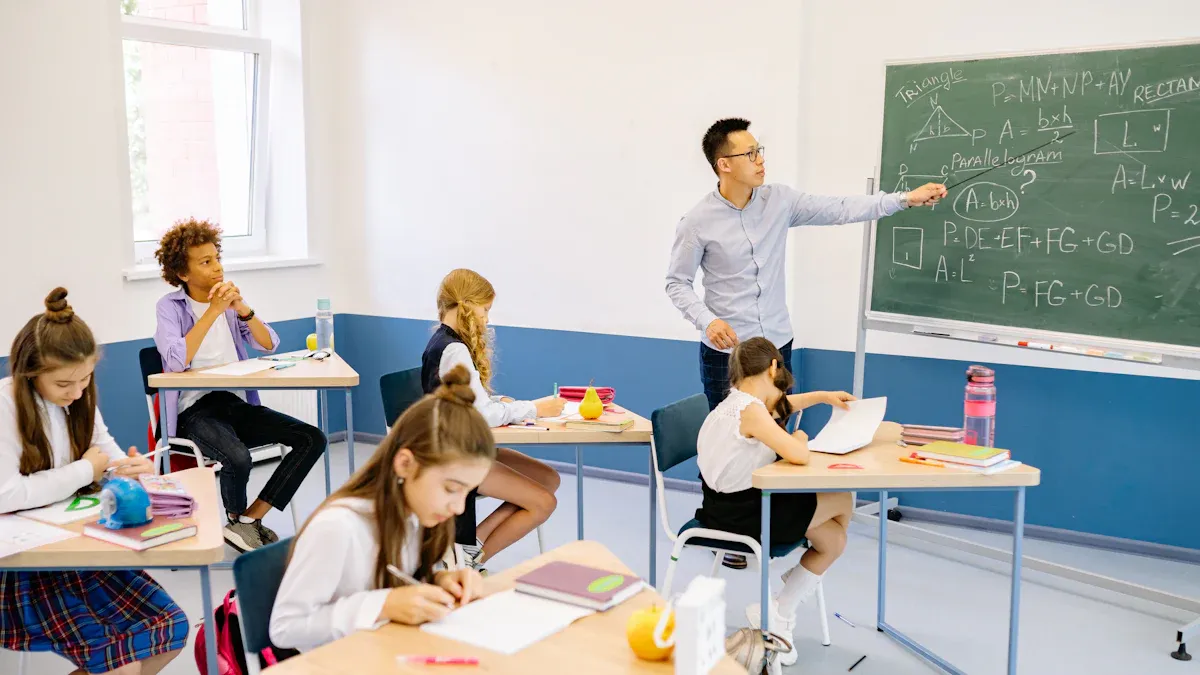
Group size can make or break learning in a group. If you put too many students together, some might not join in. If the group is too small, you might miss out on different ideas. Research says groups of three or four work best. These groups let everyone share and help each other. Bigger groups often have problems, like students not doing their part or getting distracted.
Groups of three or four students manage tasks well and stay focused.
For learning skills, groups of two to four are most effective. Larger groups lose focus and teamwork.
Remember: Small groups help everyone get involved and make group learn activities more fun.
Assign Roles
Clear Responsibilities
When you give each student a specific job in their group, you help everyone stay on track. You might ask one student to lead the discussion, another to take notes, and someone else to keep time. This way, no one feels left out, and everyone knows what to do. Students often work better when they have a clear role. You can see more teamwork and less confusion.
Enhances engagement in interactive information sharing
Knowledge Construction
Promotes knowledge transfer
Equitable Participation
Ensures all members contribute effectively
Role-Taking
Affects the relationship between collaboration and cognitive load
When you use roles, you help students share ideas and learn from each other. You also make sure everyone gets a chance to speak and help out. This makes group work fair and fun.
Rotate Roles
If you want your students to build new skills, try rotating the roles. Let each student try different jobs over time. This keeps things fresh and helps everyone learn something new. When you switch roles, students stay interested and take more responsibility.
Rotating roles helps students develop social skills and responsibility.
No one gets stuck doing the same thing, and everyone learns to work together.
You give your students a chance to practice leadership, listening, and teamwork. This makes your group activities stronger and helps everyone grow.
Set Guidelines
Teamwork Norms
You want your group of learners to know what good teamwork looks like. Clear expectations help everyone feel safe and ready to join in. When you set group norms, you give students a guide for how to act and work together. Here are some teamwork norms that research shows work best in classrooms:
Norms
Description
Everyone has the right to be heard.
Ensures all voices are valued.
Be respectful while still being critical.
Encourages constructive feedback.
No name calling.
Promotes a safe environment.
One person speaks at a time.
Facilitates orderly discussions.
Maintain confidentiality.
Builds trust among group members.
Hold yourself and each other to high standards of excellence at all times.
Encourages accountability.
Have the humility to recognize that you do not know everything and that everyone can stand to improve.
Fosters a growth mindset.
Recognize that everyone will start from different bases of knowledge.
Acknowledges diverse backgrounds.
You can post these norms in your classroom or review them before each group learn activity. When students know what you expect, they feel more confident and ready to take part in learning in a group.
Early intervention lets you help struggling students before they fall behind.
You can adjust your teaching to fit each group learner’s needs.
Tracking progress shows you what works and what needs to change.
You stay accountable for your students’ success.
Try walking around the room, asking questions, or using quick checklists. These small steps make a big difference in group learning. When you monitor progress, you help every group of learners stay on track and reach their goals.
Design Tasks
Real-World Problems
You want your students to feel excited about group work. The best way to do this is by giving them real-world problems to solve. When you use real-life situations, students see why their work matters. They take more ownership of their projects and feel proud of what they create.
Try giving each group a different task. This helps everyone feel special and encourages teamwork.
Use cooperative games for younger students. Games make learning fun and help everyone understand their role.
Let groups show what they learned in their own way. This builds confidence and responsibility.
When you use real-world problems, you boost student motivation. Students with more confidence join in more and enjoy the activity. Good group discussions make everyone interested in the topic. If you show passion as a teacher, your students will want to learn even more.
Some great group activities include:
Think-pair-share: Students talk in pairs, then share with the class.
Problem-based learning: Groups solve a big problem together over time.
Peer teaching: Students teach each other new ideas.
Higher-Order Thinking
You can help your students grow by designing tasks that make them think deeply. When you ask them to analyze, create, or solve tough problems, they learn more and build strong thinking skills.
Research shows that students who work on higher-order thinking tasks do better in school. They become better problem solvers and critical thinkers. For example, students who practice these skills score higher on tests and understand more.
Case studies, which let students explore real situations.
Simulations, where students role-play and work together to find solutions.
Challenge your students with tasks that make them think. You’ll see them become more confident and ready for anything!
Give Directions
Step-by-Step
You want your students to feel confident during group work. Giving directions in clear steps helps everyone know what to do next. When you break tasks into smaller actions, students can follow along without feeling lost. Try numbering each step or using bullet points on the board. This makes it easy for students to check their progress.
Here’s why step-by-step directions work:
Students can reread instructions if they get distracted.
When you say directions out loud, students might forget them. Written steps help them remember.
If you list steps in the order students need to do them, they finish tasks faster and make fewer mistakes.
Tip: Always give directions in the order you want students to complete them. This helps everyone stay on track.
Written & Visual
Different students learn in different ways. Some need to see instructions, while others like to read them. You can help everyone by using both written and visual directions. For example, write steps on the board and show a picture or diagram.
Lets students review at their own pace, reduces mistakes
Helps students follow directions correctly
Visual
Works well with spoken instructions for better guidance
Can be harder if too much information at once
You can pair written steps with simple drawings or charts. This makes your directions clear and easy to follow. When you use both types, you help every student succeed in group learning.
Support Groups
Circulate
You make a big difference when you walk around the classroom during group work. Students see you as a guide, not just a teacher at the front. You can listen to their ideas, answer questions, and help them stay focused. When you move from group to group, you help students talk about the task and share their thoughts. You also spot problems early and help students fix them before they get stuck.
Groups with mixed abilities work better because stronger students help others.
Activities like debates and poster creation help students remember what they learn and connect ideas.
Tip: Try asking open-ended questions as you circulate. You encourage deeper thinking and help students build confidence.
Timely Feedback
You boost learning when you give feedback right away. Students want to know how they are doing, and quick feedback helps them improve fast. When you notice something good, say it. If you see a small mistake, help students fix it before it grows. Your feedback helps students feel proud and keeps them motivated.
Timely feedback can improve performance, morale, and engagement by up to 89%.
Most students want feedback often, especially younger ones.
Immediate feedback helps fix small problems and rewards good teamwork.
Feedback helps students understand their progress and guides them toward their goals. When you give feedback, you help students become more aware of their strengths and areas to grow. This process builds confidence and helps everyone remember what they learn. You create a classroom where students feel supported and ready to succeed together.
Foster Communication
Teach Listening
You want your group of learners to talk and listen to each other. Good listening makes group learning stronger. You can show students how to listen by making eye contact and using friendly body language. When you ask follow-up questions, you help students think deeper and stay engaged. Give students a reason to listen, like finding out something new or helping a friend. Try activities that make listening fun and easy.
Show students how to listen with your actions and expressions.
Follow-Up Questions
Ask questions that keep the conversation going.
Reasons for Listening
Tell students why listening matters in group learn activities.
Activities for Reinforcement
Use games and stories to practice listening skills.
You can use activities like storytelling, Simon Says, or memory circles. These help students practice listening while having fun. When you model good listening, students learn what it looks like in a group.
Address Conflict
Sometimes, learning in a group whe students disagree. You can help students handle conflict in a positive way. Teach them to use “I” statements, like “I feel upset when…” instead of blaming others. Remind everyone that it’s okay to disagree, but hurtful comments are never allowed. If things get tense, suggest taking a short break so everyone can calm down.
Make sure everyone knows that disagreement is fine, but no one should use mean words.
Take a break if the group gets upset.
After a conflict, talk with the whole class about what happened. Keep a journal to reflect on what worked and what didn’t. Change classroom agreements if students have good ideas. When you address conflict openly, you help students feel safe and ready to learn together.
Assess Learning in Group
Check Understanding
You want to know if your students really get it during group learning. The best way is to use quick checks and ask smart questions. Try walking around and listening to each group. You can ask, “Can you explain your answer?” or “How did your group solve this problem?” This helps you see who understands and who needs more help.
Here are some great ways to check understanding in a group:
Use strategic questions to get students to show what they know.
Observation and checks for understanding
Watch and listen to students as they work in groups.
Technology tools for real-time feedback
Use apps for quizzes or surveys to see what students know right away.
Asynchronous response collection
Have students pause and submit answers at certain points in a lesson.
Mix these methods to keep things fresh. You will spot gaps in learning before they become bigger problems.
Adjust as Needed
Sometimes, you notice a group of learners needs a new challenge or extra support. You can change up the groups or give a different task. This helps everyone learn better. When you use what you learn from your checks, you make group learning in a group whe more effective.
Diverse groups help students learn more than working alone.
Careful planning makes sure group work matches your goals.
Real-time data helps you group students in new ways for better results.
Seeing each student’s progress lets you create custom strategies that boost learning.
Stay flexible. If a group gets stuck, try switching members or giving a new activity. Your quick changes can help every student grow.
Reflect Together
Group Reflection
You help your students grow when you set aside time for group reflection. This step lets everyone think about what worked, what felt tough, and how the group handled challenges. When you guide your class through reflection, you build stronger teams and better learners.
Students learn to think deeply about their choices and actions.
Emotional Expression
Everyone gets a chance to share feelings, which builds trust.
Self-Awareness
Students notice their own strengths and areas to improve.
Metacognition
Learners become aware of how they learn best.
Self-Regulated Learning
Students practice setting goals and tracking their own progress.
Development of Group Skills
Teams get better at working together and communicating.
You also create a space where students feel empowered. They start to understand group dynamics and see how their roles matter. When you encourage reflection, your group of learners learns to support each other and solve problems together.
After reflecting, you can ask groups to share their results with the class. This step boosts motivation and helps everyone feel proud of their work. When students present their outcomes, they see how their efforts matter.
You want your students to feel proud of what they accomplish together. When you celebrate group wins, you help everyone stay motivated and eager to join in next time. Students work harder when they know their efforts matter. You can use simple ways to recognize achievements that make a big difference.
Link recognition and rewards to the group’s performance and the impact of their work.
Encourage a growth mindset by praising effort, improvement, and teamwork.
When you highlight group success, you build a classroom where students feel responsible for each other. They become more engaged and excited to work as a team. A supportive group environment boosts motivation, especially during big projects.
Team-based tasks help everyone feel responsible for the outcome.
Collaboration becomes more fun, and students invest in their team’s success.
A positive classroom vibe grows stronger with every win.
Reward Collaboration
You can make teamwork even better by rewarding groups for working well together. Try a whole-class reward system where everyone earns points or privileges for showing great collaboration. This helps students see the value of helping each other.
Group projects like mural painting or crafting encourage creativity and teamwork.
When you model self-regulation and positive behavior, students follow your lead.
Effective reward systems make students want to work together, but unfair systems can cause problems.
Tip: Always focus on rewarding effort and teamwork, not just results. Avoid punishments for low-performing groups. This keeps your classroom positive and helps every student feel included.
You can make group learning work by using these 10 strategies:
Strategy
Description
Structured Tasks
Give groups clear tasks and goals.
Group Dynamics
Help students work together and stay accountable.
Evaluation Methods
Use rubrics to check both teamwork and learning.
Critical Thinking
Encourage deep thinking and sharing ideas.
Interpersonal Relationships
Build empathy and responsibility among students.
Positive Learning Experiences
Boost confidence and support risk-taking.
Career Preparation
Teach teamwork for future jobs.
Feedback Mechanisms
Give feedback often to help students grow.
Time Management
Show students how to use time wisely.
Diverse Perspectives
Let students learn from different viewpoints.
Group learning helps students do better in school and feel more confident.
You see stronger friendships and better teamwork.
Students feel less stress and enjoy learning more.
Tip: Start with one or two strategies. Try them out and see what works best for your class. You help students grow when you adapt group learning to fit their needs. Every step you take builds a stronger, happier classroom!
FAQ
How do you handle students who don’t want to join group work?
Try giving students a choice in their group or role. You can encourage participation with fun tasks and positive feedback.
Click the button to contact us for more information