Audiovisual communication, or "What Is Audio Visual Communication?", refers to the use of sound and pictures together to share information effectively. You experience this through videos, presentations, or other audiovisual tools. By combining sound and visuals, you enhance your understanding of ideas, making communication more effective. When you see and hear a message, it becomes easier to remember. The table below illustrates how "What Is Audio Visual Communication?" can improve your learning and maintain your interest.
Audiovisual communication uses sound and pictures together. This helps people understand better and remember more. Using both audio and visuals can make people pay more attention. It can even make them 400% more interested. When audio and visuals are clear, hard ideas are easier to learn. They are also easier to remember. Using audiovisual tools at school or work helps people talk and work together better. Using audiovisual content every day helps you learn new things. It also helps you make smart decisions.
You may ask, "what does audio visual mean?" It means using sound and pictures at the same time. Audiovisual communication puts together sound, images, graphics, animation, and things you can interact with. This helps you get information in a better way. When you use audio visual media, you get more than just words. You get music, voices, pictures, charts, and moving animations.
You hear someone talk through microphones and speakers.
You see slides, videos, or pictures on a screen.
You join in with animations or polls during a talk.
Here is a table that shows how different audio parts help you understand messages:
Audio Element
Contribution to Message Clarity
Microphones
Pick up sound and turn it into signals, making sound better in many places.
Speakers
Change signals into sound, making speech clear and helping people listen better.
Amplifiers
Make signals stronger so sound reaches everyone, which is important for big rooms.
Mixers
Control loudness and balance sounds, making everything sound good for recordings and live events.
Visual parts are important too. They help you pay attention, remember, and connect with the message. For example, interactive screens and matching pictures can help you focus 67% more. Pictures and charts can help you remember 43% better. When you see stories or brand pictures, you feel closer to them—up to 89% more.
Note: In many companies, making regular talks more fun with interactive tools has made people pay attention 78% more. In training, using practice with pictures helps you remember 84% more.
Communication Process
When you use audiovisual communication, you mix sound and pictures to send a message. You do not just listen or just watch—you do both. This helps you understand and remember things better.
You see faces and clues, which makes the meaning clearer.
You hear voice changes, which adds feeling and detail.
You use technology, which can change how you talk and listen.
Here is a table that compares audiovisual communication with only sound:
Aspect
Audiovisual Communication
Audio-only Communication
Vocal Effort
More
Normal
Vocal Intensity
More
Normal
Use of Visual Cues
Yes
No
Information Retention
Higher
Lower
Diagnostic Accuracy
Better
Normal
You get more from audiovisual communication because you use more senses. When you see and hear together, you remember and understand more. Studies show that mixing sound and pictures helps you keep and understand information. For example, video calls lead to fewer mistakes and better understanding than phone calls.
Audiovisual materials also help you talk to people who speak other languages and connect with people from different places. UNESCO says audiovisual media can save culture and history, so they are important for everyone.
Tip: When you use audiovisual communication, your message gets stronger and easier to remember. Try using sound and pictures in your next project!
Key Components
Audio
When you think about audio, you think about what you hear. This can be voices, music, or sound effects. Audio helps you understand messages better. Clear sound lets you hear every word and detail. Good microphones and speakers help everyone listen well. If you use a microphone in a big room, people can hear you. Speakers make sure the sound reaches the whole group. You should also think about how the room sounds. Bad sound or a poorly placed microphone can make things hard to hear. You want to fix these problems to keep your message clear.
Good microphones and speakers help people hear better. You should think about the room and how many people are there.
Visual
Visual means what you see, like pictures, videos, and charts. When you look at visuals, you see how images help you learn. Displays show slides, video calls, or interactive screens to everyone. A good camera makes video calls look sharp and clear. Visuals help you pay attention and remember things. Charts and animations make ideas easier to understand. Sometimes, a bad camera or poor setup makes things hard to see. You should set up your display and camera so everyone can see well.
Component
Description
Display
A screen shows things like video calls or slides to everyone.
Camera
A good camera is important for video calls. It should have the right zoom and be clear.
Integration
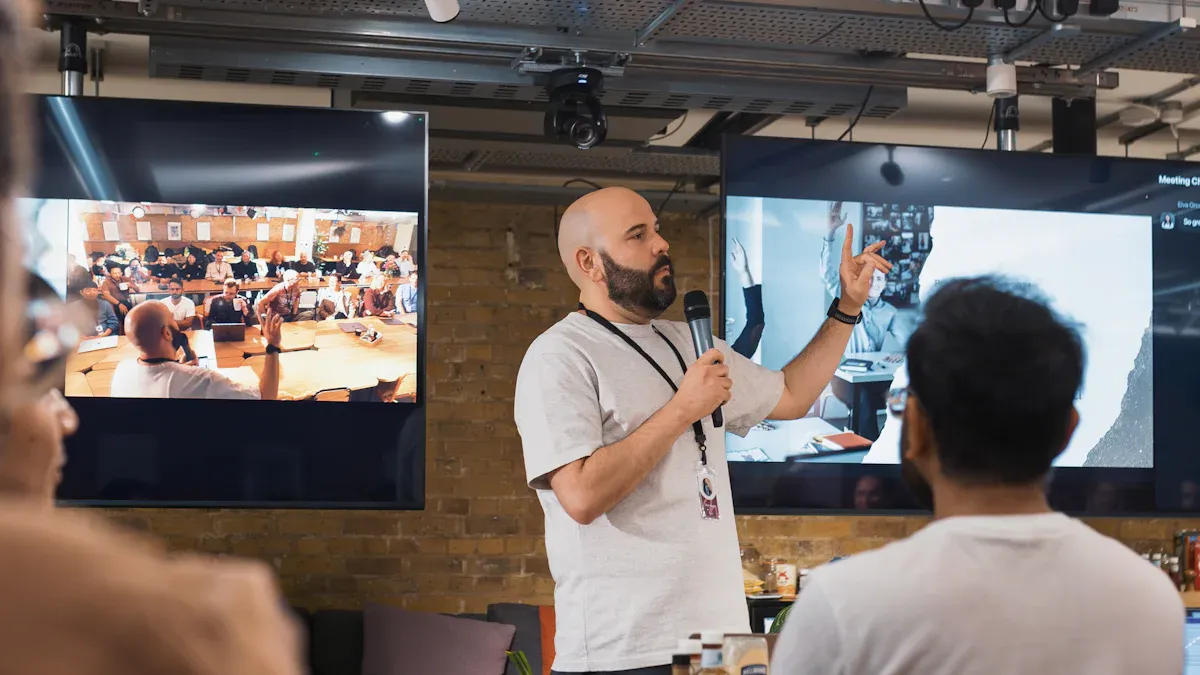
Integration means putting audio and visual parts together. Sound and images work as a team. Audiovisual systems use technology to mix these parts. You get clear pictures and good sound, which helps you learn more. Presenters can show videos and use visuals to make things interesting. This makes people want to join in and pay attention. Sometimes, equipment or software does not work well together. You need to pick the right tools and set them up right to avoid problems.
Clear pictures and good sound help you learn and remember.
Audiovisual systems let presenters show videos and use visuals, making things more fun.
This makes people want to join in and makes communication lively.
Audio visual design is very important for good communication today. Good AV design keeps people interested and helps messages get across by using both sound and pictures together.
You use audiovisual communication every day. Sound and pictures together help you understand messages. When you watch a video, you see how voices, music, and images work together. This makes ideas easier to understand. You learn more when you see charts and hear someone explain them.
First, you plan. The project manager checks what needs to be done.
Next, you build a team. The team has an engineer, programmer, installer, and commissioner.
Then, you order supplies. The purchasing team makes sure things arrive on time.
After that, you visit the place. The project manager looks at where to put the systems.
You test the equipment. The team checks everything in a safe space.
You set up and program. The team puts in all the systems and makes them work together.
You test again. The commissioner checks if all parts work as one.
You get help. The team helps you keep things working well.
Tip: Using audio-visual systems makes your messages easier to understand and remember.
Audio-Visual Systems
You see audio-visual systems in many places. In schools, you use whiteboards and screens to learn. In business, you use these systems for meetings and talks. They help you share ideas with people everywhere.
Audio-visual systems make sound and video better for talking to people far away.
You use them for learning in classrooms.
They help you show ideas in meetings.
These systems make talks more interesting.
You see them in lecture halls, boardrooms, and online events.
Whiteboards and digital signs are common in schools and colleges.
Virtual reality and augmented reality systems change how you use digital things.
New screens, like 8K, make pictures look clearer.
Special sound systems like Dolby Atmos make sound feel real.
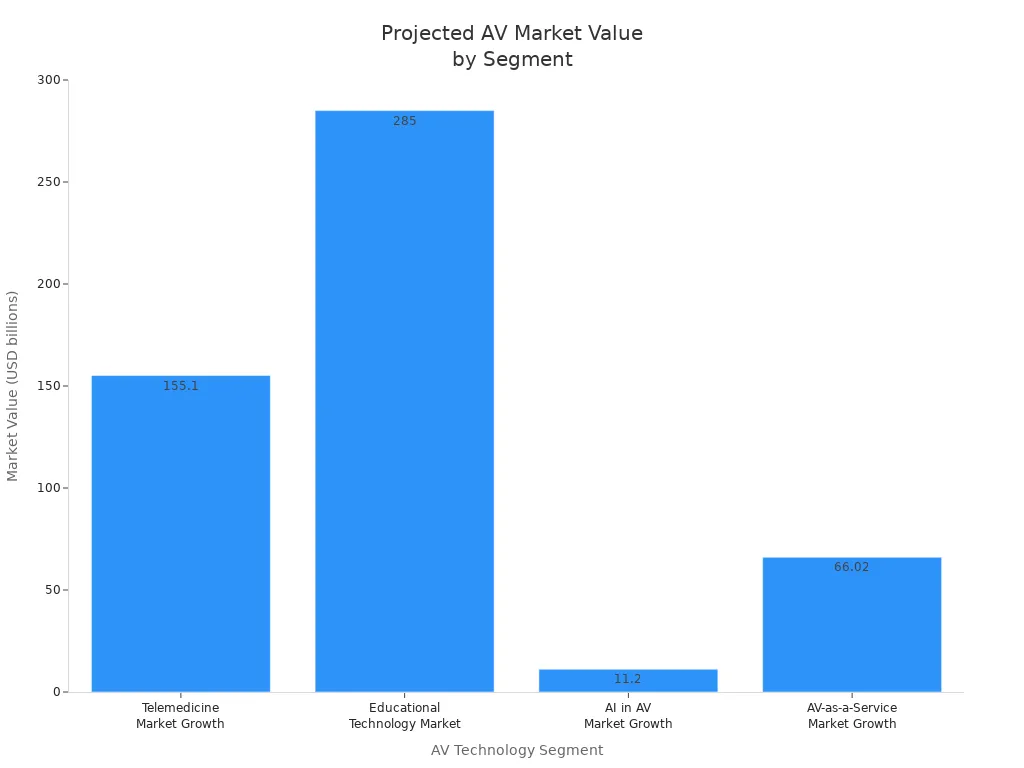
You notice new trends in audio-visual systems. Many companies use tools for working together and for hybrid work. Telemedicine and learning technology are growing fast. More people use artificial intelligence and AV-as-a-Service systems.
Real materials help you understand culture better.
Motivation Boost
Seeing many cultures makes you want to learn more.
Cultural Awareness
You see and respect cultural differences.
You see that audio-visual systems change how you learn, work, and connect. You use these tools to make your messages clear and easy to remember.
Benefits of Audiovisual Communication
Better Retention
You remember things better with audiovisual communication. Seeing and hearing together helps your brain connect ideas faster. This makes learning stronger and helps facts stay in your mind longer. Studies show people remember health facts better with both sound and pictures. For example, Van der Meulen and Wofford found that using both helps people remember and feel less confused. Older adults also do better with audiovisual communication. It helps them understand and remember health facts.
Study
Findings
Conclusion
Van der Meulen et al
They checked how well people remember health facts with just sound, just pictures, or both.
Using both sound and pictures helped people remember more than just pictures.
Wofford et al
They looked at 26 studies about teaching patients with multimedia.
Using sound and pictures together made people less unsure in many ways.
Recent evidence
New studies say older adults learn better with sound and pictures.
Audiovisual communication may help older adults stay healthier.
When you use sound and pictures together, you learn better. You understand things faster and remember more after a few days than with just words.
Higher Engagement
Audiovisual communication grabs your attention and keeps you interested. When you learn with sound, video, and things you can interact with, you feel more involved. Schools and meetings use these tools to make learning fun. You see bright pictures, hear clear sounds, and sometimes join in. This makes you want to take part and learn more.
Audio-visual technology also helps businesses talk to customers. For example, virtual reality tours let you look at products and make better choices. You feel closer to brands when you see their stories with sound and pictures. Companies use these tools to stand out and help you remember what you learn.
Tip: Adding sound and pictures to lessons or meetings can make people pay attention up to 400% more. You stay focused and learn more when you see and hear things.
Wider Reach
Audiovisual communication reaches more people than just words or sound. Your brain understands pictures much faster than reading. You remember 65% of what you see and do, but only 10% of what you read. Most people like learning with video, and 83% pick it over just words or sound.
Evidence Type
Description
Visual Processing Speed
Our brains understand pictures much faster than words.
You understand things faster, so you make choices quicker.
You remember more, so you do not need to review as much.
You pay more attention, so communication works better.
Teams work together better, so there are fewer extra meetings.
Audiovisual communication makes learning easier for everyone. You can share ideas with people from different places and backgrounds. This helps everyone learn together and makes communication better.
Note: Audiovisual communication has many good uses, but there can be problems. Face masks and loud places can make it hard to hear. You should pick the best tools and settings for the best learning.
Audiovisual Applications
Education
You see many kinds of audiovisual communication at school. Interactive whiteboards let you join lessons and solve problems with friends. Videos with subtitles help students who cannot hear well. This makes learning fair for everyone. Simulations in science show real-life examples. These help you understand hard ideas better. Teachers use these tools to make learning fun and active. You remember more when you watch and listen together. A biology video about DNA helps you remember facts better than just reading. Audio-visual aids help students with disabilities by giving subtitles or audio descriptions. This lets everyone have the same chance to learn.
Example of AV Aid
Description of Effectiveness
Interactive Whiteboards
You join lessons and think hard during problem-solving.
Videos with Subtitles
You get the same chance to learn, even with hearing problems.
Simulations in Physics
You see how science works in real life, so learning makes more sense.
You learn at your own speed with flipped classroom models. You can go back to lessons when you need help. You talk more with classmates and teachers. This builds teamwork and helps you learn better.
Evidence Type
Description
Improved Independent Learning
You control your speed and review lessons when you want.
Enhanced Peer Learning
You talk and work together, which helps you learn more.
Increased Teacher-Student Interaction
You get more chances to ask questions and get help.
Tip: Using audio-visual tools in class helps you remember, understand, and enjoy lessons.
Business
You use audiovisual communication every day at work. Presentations use slides, videos, and sound to share ideas fast. Corporate training uses multimedia tools to make learning easier and more fun. You see infographics and animations that explain hard topics. These tools help you remember and use new skills. You join remote meetings with video calls, which connect you with coworkers far away. You save money and time because you do not travel as much. Many companies spend less on travel and get more work done with safe telecommunication systems. Small businesses save money by using VOIP instead of old phone lines.
You work together better with video calls.
You join interactive talks during training.
You learn new skills faster with audio-visual tools.
You connect with teams in other places.
Almost half of companies spend less on travel. Many business leaders say video calls help workers join in and work together. Over half agree that AV solutions make teamwork easier and help people get more done.
Everyday Life
You use audiovisual communication in your daily life. You watch videos online to learn new recipes or fix things at home. You see ads with music and bright colors that help you remember brands. Audio-visual content shapes your choices and opinions. You feel closer to products when you see and hear their stories. Fun content makes you want to buy and support brands. You understand information faster when you watch and listen together. You make choices more easily because audio-visual messages are clear and interesting.
You learn new skills from online videos.
You remember brands from catchy ads.
You make choices based on what you see and hear.
Note: Audio-visual communication helps you learn, work, and make choices every day. You get information fast and remember it longer.
Audio visual communication uses sound and pictures to share ideas. You find this in videos, presentations, and social media posts. This way helps you understand messages fast. It also helps you remember things for a longer time.
Sharing audio visual content at school, work, or home helps more people learn.
Audio visual communication helps everyone learn and share ideas more easily.
FAQ
What does audio visual communication mean?
Audio visual communication uses sound and pictures to share ideas. You see it in videos, presentations, and online lessons. This way helps you understand messages quickly. It also helps you remember things for a longer time.
Why is audio visual communication important?
You learn better when you use audio visual communication. Seeing and hearing together helps you remember facts. Teachers and businesses use it to make lessons and meetings more fun.
Tip: Using sound and pictures can help you pay attention and remember more.
What are the main components of audio visual communication?
There are three main parts:
Audio: voices, music, and sound effects
Visual: images, charts, and videos
Integration: mixing sound and pictures for clear messages
Where do you use audio visual communication?
You use audio visual communication at school, work, and home. You watch videos, join video calls, and see digital signs. These tools help you learn, work, and make choices.
How does audio visual communication help you remember information?
Your brain links ideas faster when you see and hear together. Studies show you remember more with audio visual communication than with only words or sound.
Method
Retention Rate
Audio Visual
High
Audio Only
Low
Click the button to contact us for more information