The Arts, Audio/Video Technology, and Communications career cluster mixes creative work with new technology. This field helps people learn skills for media, design, and communication jobs. Many jobs need a good imagination and technical skills. People in this cluster often use tools for audio and video work. Communication is an important skill in every part of the industry. Creative thinking and technology help shape each job and project.
Key Takeaways
The arts, audio/video technology, and communications field has many jobs. These jobs need people who are creative and good with technology. You also need to be able to talk and share ideas well.
Some popular jobs are audio/video technicians and film editors. Other jobs are technical writers, makeup artists, and art directors. Each job needs special skills. They also pay differently and have different chances to grow.
This career cluster helps the economy a lot. It brings in billions of dollars and gives millions of people jobs. You can find these jobs in big cities and small towns.
New technology is changing this field. Things like virtual reality, artificial intelligence, and online streaming are making new jobs. These jobs are fun and exciting.
To do well in this field, you need to be creative. You must talk well and work with others. You should also make a strong portfolio to show your work.
Clarify Career Scope
The Arts, Audio/Video Technology, and Communications career cluster has many creative and technical jobs. People use imagination, technology skills, and communication every day. There are six main career pathways in this field:
Visual Arts: Artists make paintings, sculptures, and digital designs. Graphic designers, photographers, and art directors work here.
Performing Arts: Actors, musicians, and stage crews share stories and music. Lighting designers and set builders help with shows.
Journalism and Broadcasting: Reporters, news analysts, and camera operators share news. Broadcast technicians help send information to people.
Audio/Video Technology: Audio and video technicians, editors, and producers use sound and video tools. They help make movies, music, and online content.
Print Technology: Desktop publishers and press operators get materials ready for printing. Prepress technicians check everything before printing starts.
Telecommunications: Workers help people connect by phone, internet, and other systems.
Note: The arts audio video technology and communications sector has creative and technical jobs. Some people perform on stage or in front of a camera. Others work behind the scenes with equipment or manage projects.
Jobs in arts audio/video technology and communications need new media skills. Many workers make portfolios to show their best work. Freelance jobs are common, and some people travel or work odd hours. Experience and networking can be more important than school in some arts av technology and communications jobs.
The arts add over $800 million each year to the U.S. economy. Nearly 3 million people work in arts audio video technology and communications careers. Big cities like Los Angeles and New York have many jobs. There are also opportunities across the country. This career cluster values creativity, technical skill, and good communication.
Film and video editors help tell stories for movies and TV. They use editing software like Adobe Premiere Pro and Final Cut Pro. Editors need to be creative and know how to use technology. They work with directors and producers and have tight deadlines. The median yearly pay for editors is $70,980. Editors learn about new trends like VR and AI in video production.
Certifications and learning more help you get jobs.
Experience and portfolios matter.
Cost Attendants
Cost attendants work at places where people go for fun. They sell tickets and collect money. They give information about schedules and rules. Attendants show people where to go and keep everyone safe. They also clean equipment and keep track of how many people come. Good talking and customer service skills help in this job.
Makeup artists create looks for stage and screen. Theatrical makeup artists use bright colors for strong lights. Performance makeup artists use natural looks for close shots. They work backstage or on film sets. The average yearly pay for makeup artists is about $68,590. Most jobs are in states with big entertainment industries.
Media Programming Directors
Media programming directors plan what goes on TV and radio. They hire people, make schedules, and think of new shows. Directors check the quality and follow rules. They work with other departments and handle money. Directors need skills in media, management, and talking to others. Their work helps stations in this career cluster.
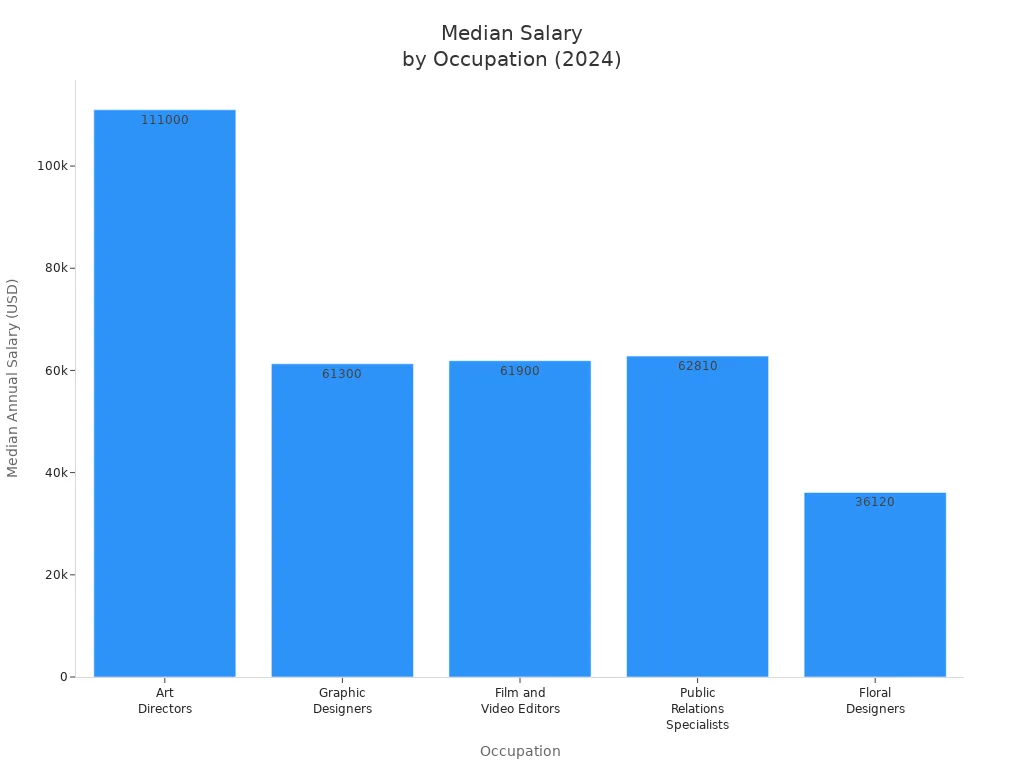
Art directors lead creative teams in advertising and media. They come up with ideas and pick design parts. Directors manage designers and show ideas to clients. They watch over projects and make sure brands look the same. The average yearly pay for art directors is about $63,818. They learn about new design trends and technology.
Think of creative ideas
Give visual direction for projects
Lead and manage creative teams
Work with clients and change designs
Watch over projects and production
Check quality and keep brand the same
Learn about new trends
Special Effects Artists and Animators
Special effects artists and animators make graphics and animations for movies, TV, and games. They use computers to make 2D and 3D models. Artists work with teams, study projects, and change animations after feedback. They focus on things like character design or CGI. Jobs for animators and special effects artists will grow by 8% from 2022 to 2032.
Main Tasks of Special Effects Artists and Animators
Big cities like Los Angeles and New York are important for arts audio video technology and communications jobs. These places have many studios, theaters, and media companies. But this field is not only in big cities. Small towns and rural areas also have creative jobs. Local theaters, galleries, and radio stations give people chances to work in the arts. There are more than 15,000 radio stations and 1,700 TV stations in the United States. This helps people share stories and connect with others everywhere.
Economic Growth and Cultural Enrichment
Arts audio/video technology and communications help the country’s economy grow. This field makes up about 4.3% of the national GDP. It is a $919.7 billion industry. There are 5.2 million jobs in this sector. That is more than jobs in farming or building. Nonprofit arts make $166.3 billion each year and give 4.6 million people work. Local businesses earn money when people go to arts events and spend on food, hotels, and other things. The sector also has a $33 billion trade surplus. Besides money, this field gives communities shows, art displays, and broadcasts. People enjoy movies, music, and art. These things help keep culture alive and inspire new ideas.
The Digital Evolution
The arts audio video technology and communications field has changed a lot in recent years. Online streaming lets people watch movies and listen to music in new ways. Journalism and advertising now use digital media instead of print. New tools like VR, AR, and AI create new jobs and change old ones. Cloud computing and video calls help people work together from anywhere. These changes help the field grow and give more career choices in arts audio visual technology and communications.
Online streaming services make more jobs for content creators.
VR, AR, and AI bring new job options.
Cloud computing and video calls help people work from home.
Tip: Arts audio video technology and communications jobs offer many choices. Some jobs are creative, and some are technical. Pay and job growth are different for each job. This field is important and always changing.
Conclusion
The arts audio video technology and communications career cluster has many creative and technical jobs. This field helps people get ready for work in media, design, and communication. People in these jobs use imagination and technology every day. They help tell stories, share news, and bring people together.
There are many arts a/v technology and communications jobs in different places. Some people work in studios, theaters, or on movie sets. Others have jobs at radio stations, art galleries, or even at home. The arts av technology and communications work setting can change fast. New tools and digital platforms give new chances for people who like audio/video technology and film.
The arts audio video technology and communications career cluster cares about creativity, teamwork, and good communication. People in this field often make portfolios to show their best work. They might work alone or for big companies. Meeting people and getting experience helps them do better in their jobs.
Here are some important facts about the arts audio visual technology and communications sector:
The arts av technology & communications career cluster has jobs like art directors, technical writers, and special effects artists.
Audio and video technology experts are important for live events and making media.
The industry helps the economy grow and brings culture to many places.
Arts audio visual technology and communications jobs can start in big cities or small towns.
The field keeps changing with new technology like VR, AR, and AI.
People who like art a/v technology and communications have many choices. They can work in journalism, broadcasting, or design. The arts audio/video technology and communications summary shows this career cluster is for creative and technical people.
Anyone who wants a job in arts audio video technology communications can find many paths. The career cluster arts audio video technology and communications is growing and exciting. Students and job seekers can find good futures in arts av technology and communications careers.
Some jobs are for performers, editors, sound technicians, public relations officers, and marketing managers.
This field includes film, print, radio, and television.
Being creative and talking well helps people do well in arts a/v technology and communications jobs. Using technology and working with others is important too. Anyone who wants a job in arts audio/video technology & communications can find lots of options in this growing field.
FAQ
What is the arts audio video technology and communications career cluster?
This career cluster has jobs in media, design, and communication. People use audio/video technology, film, and creative arts. They share stories and ideas with technology and creativity.
Which skills help in arts a/v technology and communications jobs?
Workers need to be creative and have technical skills. Good communication is important too. They use computers, cameras, and editing software. Teamwork and problem-solving are also helpful in these jobs.
Tip: Making a portfolio helps show your skills in art a/v technology and communications.
Where do people find arts audio/video technology & communications jobs?arts a v technology and communications work environment?
People can find jobs in big cities and small towns. There are jobs online too. Studios, theaters, radio stations, and galleries have these jobs. More people now work from home in audio video technology and film.
How does technology change arts audio visual technology and communications?
New tools like VR, AR, and AI bring new chances. Streaming and digital media let people work from anywhere. Each new technology helps this career cluster grow.
What education helps in careers in arts audio visual technology and communications?
Many jobs need a high school diploma or college degree. Some people learn by working or through training programs. Certificates in audio/video technology and film can help in this field.
Click the button to contact us for more information