AI in education is changing the way you learn and teach. It creates opportunities for personalized learning, tailoring lessons to fit your unique needs. In China, Squirrel AI has helped students achieve up to 30% better academic performance. Across the U.S., programs like Carnegie Learning have improved math scores significantly. Schools using AI-powered tools have reported an impressive 12% increase in attendance and a 15% drop in dropout rates. These numbers show how AI enhances engagement and success in the classroom.
For students with diverse learning needs, AI makes education more accessible. Tools like adaptive platforms and real-time feedback ensure you receive support when you need it most. As AI continues to grow, it promises to make education more effective and inclusive for everyone.
Key Takeaways
AI changes lessons to match what you need, keeping you interested and helping you do well in school.
Smart platforms give quick feedback, so you can fix mistakes fast and get better at learning.
AI tools help all kinds of students, making sure everyone gets the help they need to succeed.
Automating teacher tasks lets them spend more time with students, making learning better.
AI uses data to help teachers plan lessons and teach in ways that help students learn more.
AI in education is transforming how you learn by creating tailored experiences that fit your unique needs. Unlike traditional teaching methods, AI analyzes your learning style, strengths, and challenges to deliver personalized materials. This approach helps you stay engaged and better understand subjects.
AI tools like ChatGPT adapt to your pace, offering explanations and examples that match your level of understanding.
These systems identify when you struggle and provide timely interventions to help you overcome obstacles.
Personalized learning fosters not only academic success but also personal growth, as you gain confidence in your abilities.
By focusing on your individual needs, AI ensures that no two learning journeys are the same. This shift from one-size-fits-all education to customized strategies marks a significant step forward in modern learning.
Adaptive Platforms and Real-Time Feedback
Adaptive learning platforms powered by AI take personalization to the next level. These systems continuously assess your progress and adjust the content to match your evolving needs. For example, platforms like Realizeit create personalized learning paths by analyzing what you already know and what you need to learn next.
Real-time feedback is another game-changer. When you complete an assignment or take a quiz, AI provides instant insights into your performance. This immediate response helps you understand mistakes and improve quickly. Research shows that students using adaptive systems often achieve higher completion rates, with some courses seeing a 15-22% improvement compared to traditional methods.
These tools are especially beneficial for underserved students, helping close achievement gaps and ensuring everyone has an equal opportunity to succeed.
Supporting Diverse Learning Needs
AI in education plays a crucial role in supporting students with diverse needs. It offers tools that make learning more inclusive and accessible for everyone. For instance, AI-powered systems can create individualized education programs (IEPs) tailored to your specific requirements.
If you have a speech impediment, AI tools can help you improve communication skills.
For students with visual or auditory impairments, AI enhances assistive technologies, making it easier to access educational content.
Machine learning algorithms can even identify behavioral patterns, aiding in the early diagnosis of conditions like autism.
Evidence Type
Description
Personalization of Learning
AI tools provide real-time tutoring, language translation, and academic advising to support diverse learners.
Accessibility Enhancements
AI assists in creating more equitable learning environments by reducing resource disparities.
Universal Design for Learning
AI models help adapt course materials to accommodate diverse student needs, particularly benefiting students with disabilities.
By addressing these diverse needs, AI ensures that every student has the tools and support necessary to thrive in their educational journey.
Accessibility Revolutionized by AI in Education
Tools for Students with Disabilities
AI in education has opened new doors for students with disabilities, making learning more inclusive and accessible. You can now use AI-powered tools that cater to specific needs, helping you overcome challenges in the classroom. For example, speech-to-text software allows students with hearing impairments to follow lessons in real time. Similarly, text-to-speech tools help visually impaired learners access written materials effortlessly.
AI also enhances assistive technologies. If you have mobility issues, AI-driven devices can help you interact with digital content through voice commands or eye-tracking systems. These tools ensure you can participate fully in educational activities without feeling left out. By addressing these unique needs, AI creates an environment where every student can thrive.
AI provides equal opportunities by delivering top-notch educational materials to students in remote locations.
It eliminates geographical obstacles, allowing you to learn regardless of where you live.
AI platforms also adapt to your progress, making learning more effective. For example, virtual classrooms connect you with skilled teachers who offer personalized feedback. These platforms even include live translation features, ensuring language is never a barrier to your education.
AI tools adjust content difficulty based on your understanding, making lessons accessible to everyone.
They help bridge the digital divide, ensuring students from all backgrounds can succeed.
By leveraging AI, education becomes a tool for empowerment, reaching students who were once left behind.
Language Translation for Global Learning
AI-powered language translation tools are breaking down linguistic barriers in education. If you’re studying in a foreign language, these tools make it easier to understand course materials. AI translates text, audio, and video content into your preferred language, ensuring you don’t miss out on important information.
For example, platforms like Google Translate and Duolingo use AI to provide accurate translations and language-learning support. These tools help you communicate with teachers and peers from different parts of the world. They also enable global collaboration, allowing you to participate in international projects and discussions.
AI in education fosters a global learning environment where language differences no longer limit your potential. By connecting students and educators worldwide, it creates opportunities for cultural exchange and shared knowledge.
AI Enhancing Teacher Support and Efficiency
Automating Administrative Work
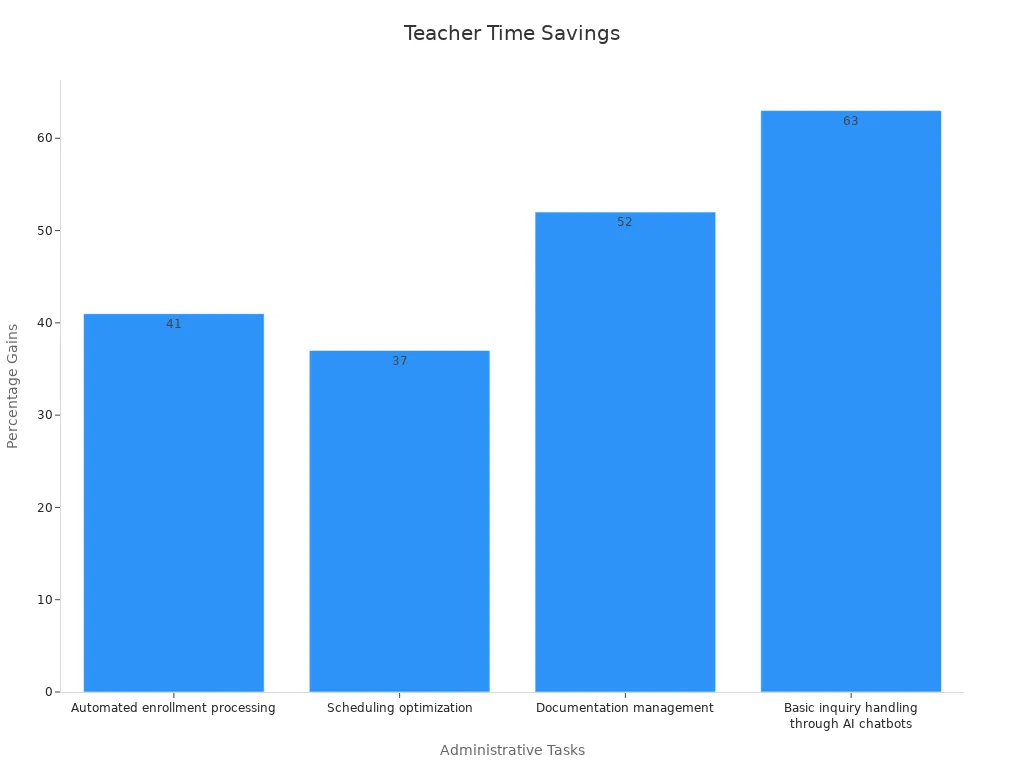
AI in education simplifies administrative tasks, saving you time and effort. Instead of spending hours on repetitive work, you can focus on teaching and supporting your students. AI tools handle tasks like enrollment processing, scheduling, and documentation management with remarkable efficiency.
These tools reduce your workload, allowing you to dedicate more time to meaningful interactions with students.
AI Tools for Lesson Planning and Grading
AI-powered tools revolutionize lesson planning and grading, making your job easier and more efficient. These systems analyze curriculum requirements and student data to suggest tailored lesson plans. Grading tools evaluate assignments quickly, providing detailed feedback that helps students improve.
Teachers redirect 15.4 hours per week toward instructional planning and student support.
92% of teachers report less evening and weekend work.
78% of teachers spend more time on personalized instruction.
When you use AI for grading, you ensure consistent evaluation and detailed feedback. This approach not only saves time but also enhances student performance by encouraging them to act on the feedback they receive.
Improving Teacher-Student Interactions
AI enhances your interactions with students by freeing up time and improving communication. AI teaching assistants handle routine queries, allowing you to focus on complex questions and provide quality feedback.
Enhances meaningful interactions between instructors and students
Allows instructors to focus on more complex questions and provide quality feedback
AI tools support collaborative learning
Improves group awareness and social dynamics
Enhances students' knowledge, skills, and task performance in collaborative settings
An instructor shared, "I think it allows us time to have conversations that are more meaningful… in some ways you're choosing quality over quantity." By using AI, you can create a more engaging and supportive learning environment for your students.
Data-Driven Insights in AI Education
Analyzing Student Performance
AI in education provides powerful tools to analyze how you learn and perform. These systems track your progress, identify your strengths, and highlight areas where you may need extra help. For example:
AI algorithms adapt assessments to match your learning style, ensuring you receive the right level of challenge.
Real-time data analytics give teachers insights into your performance, helping them tailor their teaching methods.
This approach improves your learning experience by offering personalized feedback and targeted support. Continuous data analysis also helps educators understand how to better meet your needs, creating a more effective and engaging learning environment.
Predictive Analytics for Early Interventions
Predictive analytics can make a big difference in your academic journey. These tools monitor your behavior and performance to spot early signs of struggle. For instance, Georgia State University uses predictive analytics to track over 800 students daily. This system has enabled over 250,000 one-on-one interventions, improving graduation rates by 7 percentage points.
If you’re at risk of falling behind, predictive analytics ensures you get the help you need before it’s too late. These systems identify potential challenges and recommend solutions, such as tutoring or additional resources. By addressing issues early, predictive analytics helps you stay on track and achieve your goals.
Informing Curriculum and Policy Decisions
AI in education doesn’t just benefit students and teachers—it also shapes how schools operate. Data-driven insights help educators and policymakers make informed decisions about curriculum and teaching methods. Studies show that changes influenced by AI have a significant impact on academic outcomes. For example:
Adjustments to teaching methods improved outcomes with a beta coefficient of 0.454.
Ethical guidelines and policies also contributed positively, though to a lesser extent.
When schools use AI to analyze what works and what doesn’t, they create better learning environments for you. These insights ensure that educational strategies evolve to meet the needs of modern learners.
Challenges and Ethics of AI in Education
Data Privacy and Security Concerns
AI in education collects vast amounts of data about you, including your learning habits, performance, and personal information. While this data helps create personalized learning experiences, it also raises concerns about privacy and security. If this information falls into the wrong hands, it could lead to misuse or identity theft.
Educational institutions must implement strong security measures to protect your data. Encryption, secure servers, and regular audits are essential to prevent breaches. You should also have control over how your data is used. Transparent policies and consent-based data collection ensure your privacy remains intact.
Tip: Always check how your school or platform handles your data. Understanding their privacy policies can help you stay informed and protected.
Addressing Bias in AI Algorithms
AI systems rely on data to make decisions, but if the data contains biases, the outcomes can be unfair. For example, if an AI tool uses historical data that favors certain groups, it might unintentionally disadvantage others. This can affect your learning experience, especially if you're part of an underrepresented group.
Developers must train AI systems on diverse datasets to minimize bias. Regular testing and updates ensure these tools remain fair and inclusive. As a student, you benefit most when AI treats everyone equally, regardless of background or ability.
Note: Fair AI systems promote equity in education, giving every student an equal chance to succeed.
Balancing Technology with Human Interaction
AI enhances education, but it cannot replace the human connection that makes learning meaningful. You need teachers to guide, inspire, and support you in ways technology cannot replicate. Striking the right balance between AI and human interaction is crucial.
Measures how actively students participate in learning activities enhanced by AI.
Quality of Interactions
Assesses the depth and meaningfulness of human interactions in the classroom.
Learning Outcomes
Evaluates the overall effectiveness of teaching strategies improved with AI.
Faculty Satisfaction
Considers educators' comfort and satisfaction with AI tools in their teaching practices.
Strategies like blending AI tools with collaborative activities ensure you benefit from both technology and human connections. Teachers play an irreplaceable role in fostering creativity, empathy, and critical thinking—skills that AI cannot teach.
Remember, while AI supports your learning, human interaction remains the heart of education.
AI in education is reshaping how you learn and grow. It creates personalized experiences, making lessons more engaging and accessible. To unlock its full potential, responsible implementation must address challenges like privacy and bias. Long-term success depends on several factors: