Imagine a world where your campus operates like a finely tuned machine, responding to your needs in real time. This is the power of IoT in higher education. In 2025, over 80% of universities rely on IoT for facility management, and 55% use smart ID cards for seamless access and payments. These technologies create smarter campuses, where IoT-driven systems optimize resources and improve safety. For students, IoT enhances personalized learning by analyzing performance data and tailoring recommendations. With adaptive tools and automated processes, institutions save time, reduce costs, and deliver better educational experiences.
Key Takeaways
IoT makes campuses work better by automating tasks like tracking attendance and managing energy. This saves time and resources.
Learning becomes more personal with IoT. It studies how students perform and adjusts lessons to fit their needs.
Real-time systems help keep campuses safe. They track how many people are around and warn staff during emergencies.
Smart campuses help the environment. They use energy-saving systems to cut waste and lower carbon pollution.
Using IoT tools gets students ready for future jobs. It improves their tech skills and gives them access to cool learning tools.
Benefits of IoT in Higher Education
Resource Optimization
IoT in higher education helps you make the most of campus resources. Smart sensors monitor lighting and heating systems, ensuring energy efficiency. For example, these sensors can detect when classrooms are empty and automatically turn off lights and heating. This reduces waste and saves money. Additionally, IoT-connected devices streamline routine tasks like tracking student attendance, which allows teachers to focus on teaching.
Smart building management systems also improve how classrooms and resources are scheduled. These systems monitor variables like lighting, temperature, and noise levels to create optimal learning conditions. By using IoT, universities can reduce CO2 emissions and enhance the overall campus experience.
Enhances industry partnerships and internship opportunities
Strengthen long-term partnerships
Improves talent development models
Adjust talent development programs
Aligns educational offerings with industry needs
Enhanced Campus Safety
IoT technology makes campuses safer for everyone. Real-time monitoring systems track classroom occupancy, ensuring compliance with safety protocols. For instance, the University of Bologna used IoT to monitor room capacity during the COVID-19 pandemic. The system alerted staff when occupancy limits were exceeded, helping maintain a safe environment.
IoT also supports long-term safety and sustainability. Data visualization tools help staff optimize classroom usage and scheduling. This not only improves safety but also contributes to energy efficiency. With IoT, you can feel more secure on campus while benefiting from a sustainable environment.
Personalized Learning Experiences
IoT in higher education transforms how you learn. Smart devices collect data on your performance and provide tailored recommendations. This helps you focus on areas where you need improvement. IoT applications also enhance the quality of learning by creating personalized experiences. For example, adaptive learning platforms adjust content based on your progress, making it easier for you to acquire knowledge.
The benefits of IoT extend beyond learning quality. It also reduces educational costs by automating processes and optimizing resources. As a result, you gain access to high-quality education at a lower cost.
IoT applications improve the overall quality of learning experiences.
Improved Knowledge Acquisition
Students gain knowledge more effectively through personalized learning.
Cost Reduction
Implementation of IoT can lead to reduced educational costs.
Operational Efficiency
Operational efficiency is one of the most significant advantages of IoT in higher education. By automating routine tasks and streamlining processes, IoT allows institutions to save time and resources while improving the overall campus experience.
IoT-connected systems monitor energy consumption, building maintenance, and security in real time. For example, smart sensors can detect when a classroom needs cleaning or when equipment requires repairs. This proactive approach reduces downtime and ensures that facilities remain in optimal condition. You benefit from a well-maintained campus that operates smoothly.
IoT also enhances how resources are allocated. Real-time data helps universities adjust schedules, optimize classroom usage, and manage utilities more effectively. For instance, if a lecture hall is underutilized, IoT systems can reassign it to other activities, ensuring no space goes to waste. This not only improves operational efficiency but also reduces costs.
Here are some ways IoT contributes to operational efficiency in higher education:
Energy Management: IoT devices track energy usage and adjust systems like lighting and HVAC to minimize waste. This reduces utility bills and supports sustainability goals.
Resource Accessibility: IoT provides students with real-time access to resources such as library books, lab equipment, or study spaces. This improves your experience and ensures you get what you need when you need it.
Interactive Learning: IoT supports teaching by enabling interactive tools that engage students and make lessons more effective. This boosts both learning outcomes and instructional efficiency.
Research Acceleration: IoT facilitates the collection and analysis of large data sets, speeding up research processes and discoveries. This empowers universities to stay at the forefront of innovation.
By integrating IoT into campus operations, institutions can create a more efficient and responsive environment. Whether it’s through better energy management or improved access to resources, IoT in higher education is transforming how universities function.
Applications of IoT in Higher Education
Smart Campuses
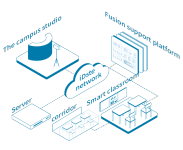
IoT transforms traditional campuses into smart environments that enhance your daily experience. Universities use IoT technologies to monitor and optimize various aspects of campus life. For example, smart cameras and AI-enabled facial recognition systems improve security by ensuring only authorized individuals access restricted areas. Health kiosks and wearable devices track wellness metrics, offering insights into student health and connecting you to support services when needed.
Smart campuses also focus on sustainability. Energy-efficient buildings equipped with IoT sensors reduce carbon footprints by optimizing lighting, heating, and cooling systems. Smart recycling systems encourage eco-friendly practices, making campuses greener and more sustainable. Transportation becomes more efficient with IoT-enabled parking systems and shuttle coordination, reducing congestion and improving mobility.
AI-based course planning and real-time tracking of educational metrics enhance student involvement.
Operational Efficiency
IoT technologies monitor parking and coordinate shuttles, reducing congestion and improving transport.
Safety
AI-enabled facial recognition and smart cameras enhance security and ensure authorized access.
Sustainability
Energy-efficient buildings and smart recycling systems reduce carbon footprint and promote eco-friendliness.
Health Monitoring
Health kiosks and wearable devices provide insights into student wellness and access to support services.
By integrating IoT into campus operations, universities create smarter, safer, and more sustainable environments that improve your overall experience.
Interactive Learning Environments
IoT revolutionizes how you learn by creating interactive and immersive environments. Smart devices and sensors enable real-time feedback, helping you understand your progress and areas for improvement. Adaptive learning platforms adjust content based on your performance, ensuring lessons match your pace and learning style.
Immersive technologies powered by IoT, such as augmented reality (AR) and virtual reality (VR), make learning more engaging. For instance, IoT-enabled VR labs allow you to conduct experiments in simulated environments, enhancing your understanding of complex concepts. These tools also foster collaboration by connecting you with peers and instructors in virtual spaces.
Several studies highlight the effectiveness of IoT-enabled e-learning systems. Quantitative data shows that these systems improve academic performance by providing personalized learning experiences. Automation of tasks like attendance tracking further streamlines the learning process, allowing instructors to focus on teaching while you benefit from a more efficient system.
Tip: Embrace IoT-powered tools like AR and VR to make your learning experience more interactive and engaging.
IoT-Driven Research
IoT plays a pivotal role in advancing research initiatives within higher education. Universities leverage IoT technologies to collect and analyze large datasets, accelerating discoveries and fostering innovation. For example, IoT-based smart laboratories enable you to conduct experiments with precision, offering real-time data that enhances academic performance.
Research at Carnegie Mellon University emphasizes the importance of IoT privacy and security standards in academic settings. The development of IoT privacy labels increases transparency and accountability, ensuring responsible data collection and usage. These advancements not only inform consumers but also shape regulatory practices, creating a safer and more ethical environment for research.
IoT also supports interdisciplinary collaboration. By connecting researchers across different fields, IoT facilitates the sharing of data and resources, driving innovation. Whether you're studying environmental science or artificial intelligence, IoT tools help you access the information and equipment needed to push boundaries and achieve breakthroughs.
Real-Time Student Monitoring
IoT technology has revolutionized how universities monitor student activities and well-being. Real-time student monitoring systems use IoT devices to track attendance, engagement, and even health metrics. These systems provide valuable insights that help you stay on track academically and maintain a balanced lifestyle.
Smart ID cards and wearable devices play a key role in this transformation. For example, your smart ID card can automatically log your attendance when you enter a classroom. This eliminates the need for manual roll calls and ensures accurate records. Wearable devices, such as fitness trackers, monitor your physical activity and stress levels. Universities use this data to identify students who may need additional support, whether it’s academic counseling or mental health resources.
Note: Real-time monitoring doesn’t just benefit students. It also helps instructors identify patterns in class participation and engagement, allowing them to adjust their teaching methods for better outcomes.
IoT-enabled monitoring systems also enhance campus safety. Location-tracking features ensure that universities can quickly locate students during emergencies. For instance, if a natural disaster occurs, these systems can pinpoint your location and guide you to the nearest safe zone. Additionally, IoT sensors in dormitories and common areas monitor environmental conditions, such as air quality and temperature, to ensure a comfortable and safe living environment.
Here are some ways real-time student monitoring improves your campus experience:
Attendance Tracking: Automated systems save time and ensure accuracy.
Health Monitoring: Wearable devices track your physical and mental well-being.
Emergency Response: Location tracking helps universities respond quickly during crises.
Engagement Insights: Data on participation helps instructors tailor their teaching strategies.
While these systems offer numerous benefits, they also raise questions about privacy. Universities must balance the advantages of real-time monitoring with the need to protect your personal data. Transparent policies and robust security measures are essential to ensure that IoT in higher education remains a tool for empowerment rather than intrusion.
Challenges of IoT in Higher Education
Data Security and Privacy
IoT systems in higher education face significant challenges in protecting sensitive data. As you interact with IoT devices, they collect and store vast amounts of personal and academic information. This creates vulnerabilities that hackers and malicious actors can exploit. For example, flaws in software or fragmented security protocols can expose your data to unauthorized access. Universities must address these risks to ensure your privacy and safety.
Unauthorized access to sensitive information stored in IoT devices.
Hacking
Malicious attempts to exploit vulnerabilities in IoT systems.
Software Vulnerabilities
Flaws in software that can be exploited to gain unauthorized access or disrupt services.
Device Security
Challenges in ensuring that all connected devices are secure from attacks.
IoT Exploitation
The use of IoT devices for malicious purposes, such as launching attacks on other systems.
Denial of Service Attacks
Attacks aimed at making IoT services unavailable to users by overwhelming them with traffic.
Fragmented Security Protocols
Inconsistent security measures across different IoT devices leading to vulnerabilities.
Need for Cybersecurity Education
Growing demand for training and awareness programs to address IoT security challenges.
Universities must invest in robust cybersecurity measures and educate you about safe IoT practices. This ensures that IoT remains a tool for innovation rather than a source of risk.
Financial and Technological Barriers
Implementing IoT in higher education requires substantial investment. Universities often struggle to allocate funds for IoT infrastructure, especially when budgets are tight. Costs include purchasing IoT devices, upgrading networks, and maintaining systems. If your institution lacks financial resources, it may delay or limit IoT adoption.
Technological barriers also pose challenges. Older campuses may need extensive upgrades to support IoT systems. For example, outdated Wi-Fi networks can’t handle the data demands of connected devices. Additionally, universities must ensure compatibility between new IoT technologies and existing systems. These obstacles can slow progress and affect your access to advanced tools.
To overcome these barriers, institutions must explore partnerships with tech companies and government grants. These collaborations can reduce costs and provide the expertise needed to implement IoT effectively.
Adoption by Faculty and Students
The success of IoT in higher education depends on how well faculty and students embrace it. You may find new technologies intimidating or difficult to use. Faculty members might resist IoT adoption due to a lack of training or concerns about workload. These attitudes can hinder the integration of IoT into teaching and learning.
Universities must prioritize training programs to help you and your instructors understand IoT tools. For example, workshops can teach faculty how to use IoT-enabled platforms for interactive lessons. Students can benefit from tutorials that explain how IoT devices enhance learning and campus life.
Tip: Embrace IoT as an opportunity to improve your educational experience. With proper guidance, you can adapt to these technologies and unlock their full potential.
By addressing these challenges, institutions can ensure that IoT benefits everyone on campus.
Ethical Considerations
IoT in higher education raises important ethical questions that you should consider. As universities adopt IoT technologies, they must ensure that these tools respect your rights and promote fairness. Ethical concerns often revolve around privacy, data usage, and equal access.
Privacy and Consent
IoT devices collect vast amounts of personal data, including your location, health metrics, and academic performance. Universities must ask for your consent before gathering this information. Transparent policies should explain how your data will be used and stored. Without proper safeguards, your privacy could be at risk.
Note: Always review your institution's privacy policies to understand how your data is handled.
Data Ownership and Usage
Who owns the data collected by IoT devices? This question is critical. Universities must ensure that you retain control over your personal information. Ethical practices require institutions to use your data responsibly and avoid selling it to third parties. Misuse of data can lead to discrimination or unfair treatment.
Ethical Concern
Description
Data Ownership
Ensures students maintain control over their personal information.
Responsible Usage
Prevents misuse of data for profit or discriminatory practices.
Transparency
Requires clear communication about how data is collected and utilized.
Fairness and Accessibility
IoT should benefit everyone equally. Universities must address disparities in access to IoT tools. For example, students from low-income backgrounds might struggle to afford IoT-enabled devices. Ethical implementation means providing resources and support to ensure that all students can participate fully in IoT-driven education.
Balancing Innovation and Ethics
While IoT offers exciting possibilities, universities must balance innovation with ethical considerations. They should prioritize your well-being and ensure that IoT technologies empower rather than exploit. Institutions must also train faculty and staff to use IoT responsibly, fostering an environment of trust and accountability.
By addressing these ethical concerns, universities can create IoT systems that respect your rights and enhance your educational experience.
Future of IoT in Higher Education
AI and IoT Integration
The combination of artificial intelligence (AI) and IoT is reshaping higher education. AI algorithms analyze data collected by IoT devices to create smarter and more efficient learning environments. For example, AI can personalize remote learning experiences by adapting content to your progress, while IoT devices monitor your participation. This ensures that you stay engaged and receive the support you need.
AI and IoT also improve classroom management. AI tracks student behavior, while IoT monitors classroom conditions like temperature and lighting. Together, they create an environment that enhances focus and learning. Additionally, these technologies optimize campus operations. AI manages schedules and resources, while IoT controls access to facilities, ensuring smooth day-to-day activities.
AI tracks behavior; IoT adjusts classroom conditions.
Student Health and Safety
AI tracks symptoms; IoT monitors interactions for safety.
Campus Management
AI optimizes operations; IoT controls facility access.
Parent–Teacher Communication
AI facilitates communication; IoT provides real-time updates on progress.
Learning Analytics
AI analyzes performance; IoT collects engagement data.
By integrating AI and IoT, universities can provide you with a more tailored and efficient educational experience.
Lifelong Learning Opportunities
IoT is expanding opportunities for lifelong learning. Smart devices and sensors enable interactive teaching methods that cater to learners of all ages. For instance, IoT-powered platforms offer personalized content, allowing you to learn at your own pace. These tools make education more accessible and engaging, whether you’re a student or a professional seeking new skills.
Smart campuses also support lifelong learning. IoT technologies create environments that adapt to your needs, making it easier to access resources and participate in educational activities. Investments in IoT-enabled campuses align with sustainability goals, enhancing the overall learning experience.
IoT-enabled ecosystems optimize energy use, promoting sustainability.
With IoT, you can continue learning throughout your life, gaining knowledge and skills that keep you competitive in a rapidly changing world.
Global Access to Education
IoT is breaking down barriers to education, making it accessible to learners worldwide. Smart learning systems powered by IoT connect you to resources and instructors, no matter where you are. This is especially important for students in remote or underserved areas, who can now access high-quality education through digital platforms.
The growth of the IoT in education market highlights its impact. In 2018, the market was valued at $4.8 billion and is projected to reach $46.4 billion by 2032, with a compound annual growth rate (CAGR) of 18.6%. This rapid expansion reflects the increasing demand for IoT solutions that enhance global education.
The IoT in education market grew from $4.8 billion in 2018 to $8.7 billion in 2022.
By 2032, the market is expected to reach $46.4 billion, with a CAGR of 18.6%.
IoT is transforming education into a global endeavor, ensuring that you can learn anytime, anywhere, and on any device.
Autonomous Smart Campuses
Autonomous smart campuses represent the future of higher education, where technology works seamlessly to create self-sustaining and efficient environments. These campuses rely on IoT devices, artificial intelligence, and automation to manage operations, enhance safety, and improve your overall experience.
Imagine a campus where energy systems adjust automatically based on real-time data. The University of Texas at Austin operates the largest microgrid in the U.S., supplying energy to its vast campus. This system ensures uninterrupted power while reducing energy waste. Similarly, Arizona State University uses sensors and cameras in its football stadium to optimize operations and enhance the fan experience. These examples highlight how autonomous systems can transform campus life.
Transportation on autonomous campuses also becomes smarter. The University of Wisconsin-Madison plans to create a testing zone for autonomous vehicles. Traffic light sensors will improve road safety and reduce congestion. As a student, you could benefit from faster commutes and safer travel across campus.
Tip: Autonomous campuses prioritize sustainability. Smart buildings equipped with IoT sensors monitor energy usage, reducing carbon footprints and promoting eco-friendly practices.
Autonomous systems also enhance learning environments. Classrooms equipped with IoT devices adjust lighting and temperature to create optimal conditions for focus. Automated scheduling systems ensure that resources like labs and study spaces are always available when you need them.
These campuses represent a shift toward self-sufficient ecosystems. They integrate advanced technologies to create environments that adapt to your needs, making education more accessible, efficient, and sustainable. As autonomous smart campuses continue to evolve, they will redefine how you experience higher education.
IoT is reshaping higher education by creating smarter campuses and improving learning environments. Interconnected devices enhance operational efficiency and personalize your educational experience. For example, IoT-enabled sensors adjust lighting and air quality, ensuring optimal conditions for learning. These technologies also streamline administrative tasks, allowing institutions to focus on delivering better education.
Despite challenges like data security and financial barriers, the potential of IoT in higher education remains undeniable. By embracing these advancements, universities can stay competitive and provide you with innovative, efficient, and engaging learning opportunities.
FAQ
What is IoT, and how does it work in higher education?
IoT, or the Internet of Things, connects devices to share data. In higher education, IoT powers smart campuses, tracks attendance, and personalizes learning. Sensors, wearables, and connected systems collect and analyze data to improve your educational experience.
How does IoT improve campus safety?
IoT enhances safety by using real-time monitoring systems. Smart cameras, occupancy sensors, and wearable devices track activity and alert staff during emergencies. These tools ensure you feel secure while on campus.
Are there privacy concerns with IoT in education?
Yes, IoT collects personal data like attendance and health metrics. Universities must protect your privacy by using secure systems and transparent policies. Always review how your institution handles data to stay informed.
Can IoT reduce educational costs?
Yes, IoT automates tasks and optimizes resources, saving money. For example, smart energy systems lower utility bills, and automated attendance tracking reduces administrative work. These savings can make education more affordable for you.
What skills do students need to adapt to IoT technologies?
You need basic digital literacy and an understanding of IoT tools. Familiarity with smart devices, data privacy, and adaptive learning platforms helps you make the most of IoT in education. Workshops and tutorials can support your learning.
Click the button to contact us for more information